A Hive of Activity
In my 2026 diary April 19th marks the first day of spring with blue skies, little wind and double digits showing on the thermometer. The bees agreed and so it began – the first inspection of the season. Just a brief look at the colonies to check that there were no signs or swarming and that there were plenty of stores (or at least there was no risk of starvation now).
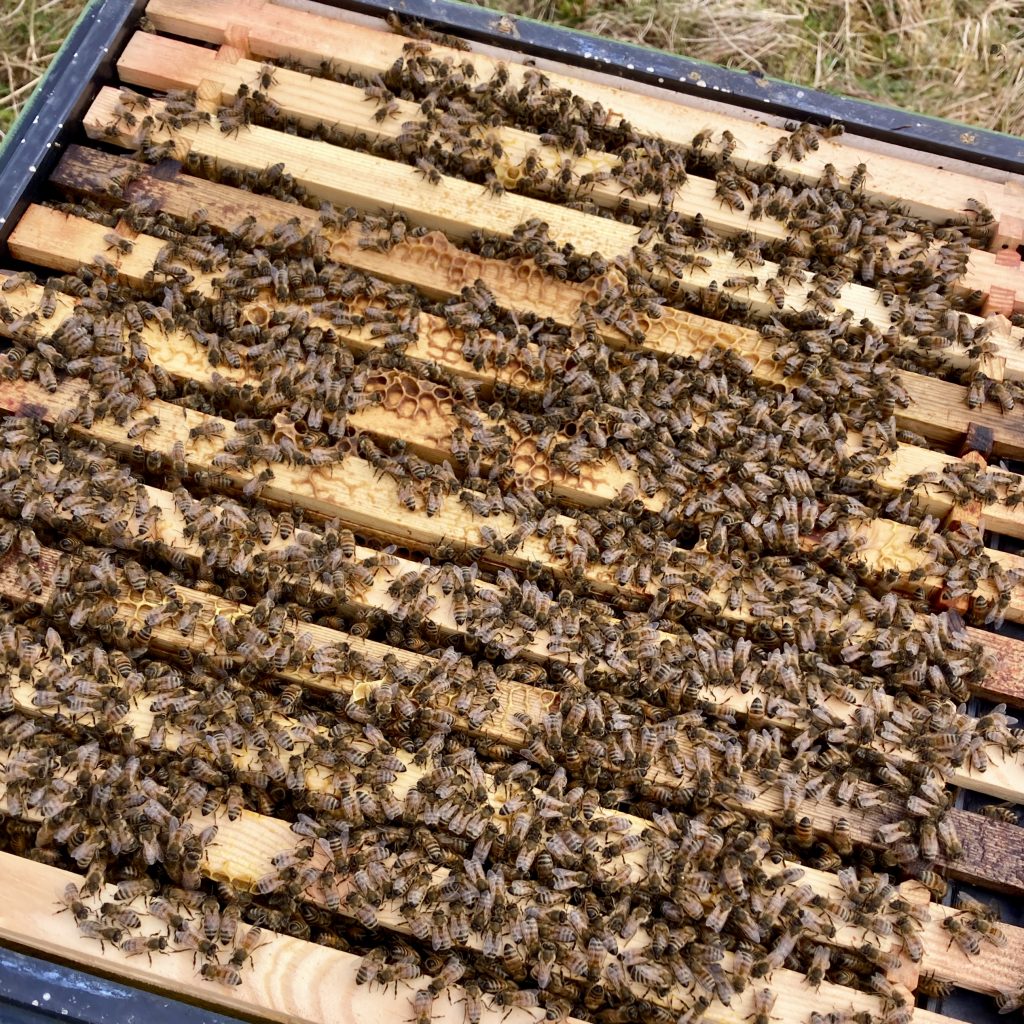
It was with some relief that I popped of the crown board to witness a box full of bees! Such a relief given the long and wet winter. Whilst the inspection wasn’t perfect, it was obvious that the bees had both capped honey stores and were bringing in nectar and pollen. There was a limited amount of brood, but there was brood and I was comforted to hear that this is also the case just over the Minch.
It may be a slow start, but it is the start of the beekeeping season here on the Isle of Lewis. With a huge number of colony losses reported further south, and the blame being put on the doorstep of the wet winter, I do wonder how my (and other beekeepers in Scotland) colonies have made it through an equally bleak winter?
Perhaps they really are just hardier, well adapted bees up North, but I suspect something else is going on South of the border.
Either way I think it’s fair to say that the Buckfast Bees of the Hebridees have managed their winter stores well. I also think that double brooding them here has made a difference by giving them a good buffer of stores for both winter and long dearths they go through here. Of course once summer comes I know the Buckfast bees will use all of the 24 brood frames to maximise their workforce and bring in the honey!
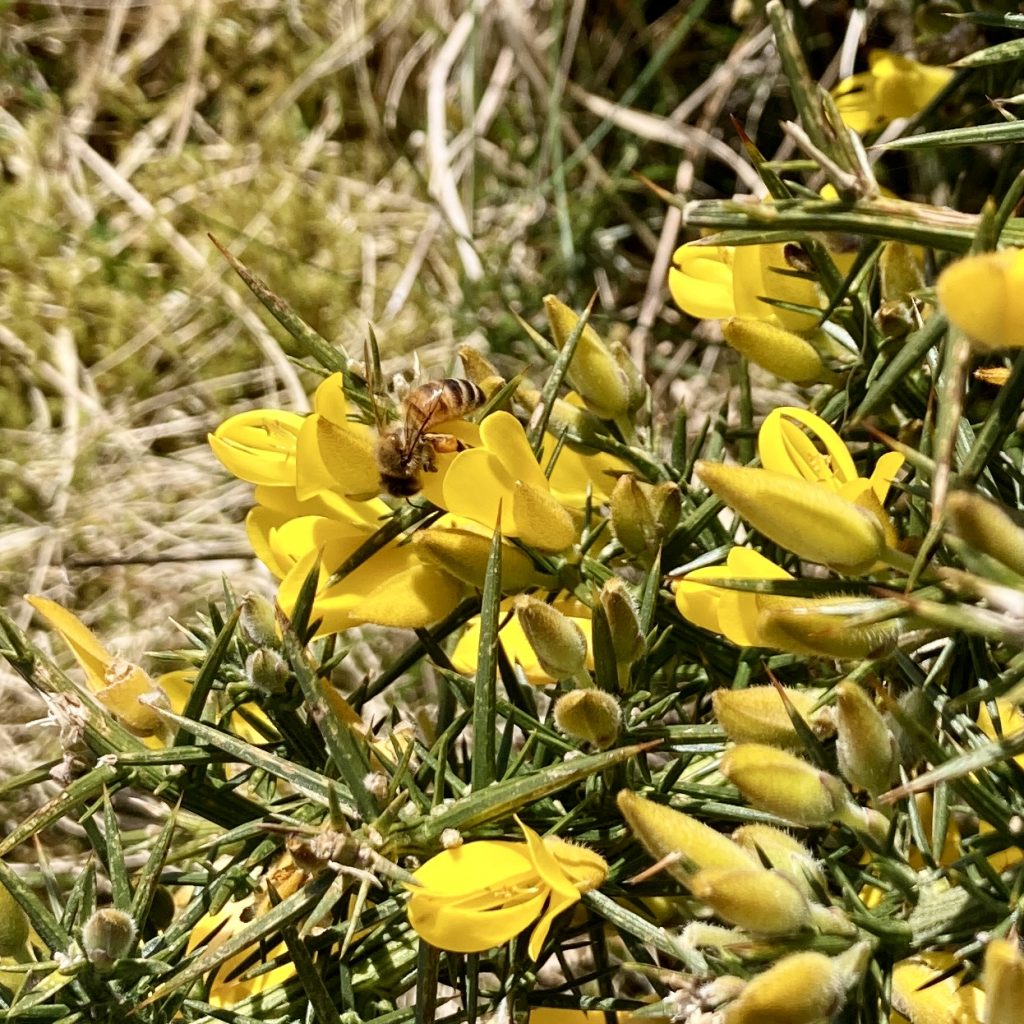
Gorse (or whin as it is locally known) is one of the first signs of spring and the bright yellow flowers certainly offer an unmissable splash of colour after the long Hebridean winter.
Have a Super Time
Hive 1 has come through winter very strong. It went into winter with a double brood configuration. This is where two brood boxes are provided for the queen to lay her eggs and for the bees to keep stores close to the brood. An efficient use of space. Over winter this extra box beneath the main brood box moves the bees up, away from the entrance, providing additional warmth away from the floor. It also gave room for the buckfast bees to stock up their winter stores. The results are in: on inspection the over-wintered bees still have a good amount of food remaining.
Based on this inspection I decided that a honey super could be added. The bees are filling the top box and expansion should happen quickly now the flow of nectar has started, so I popped on a queen excluder (a divider mesh that the queen cannot fit through) and sat a shallower box above this for the bees to store honey. Because the queen cannot access these upper supers they are reserved for stores of honey and not brood. These are the boxes that I shall take to extract the delicious Hebridean wildflower honey from at the end of the season!
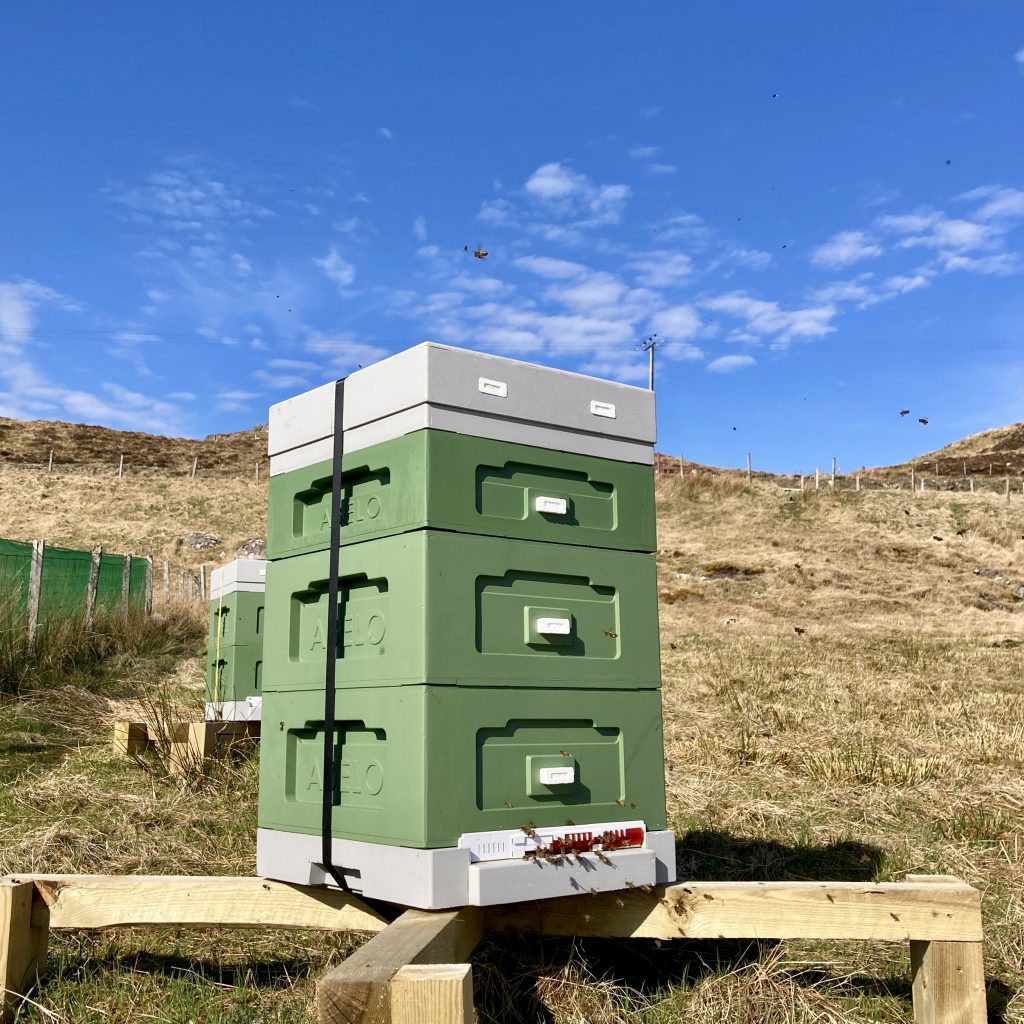
Hive 2 went into winter smaller, and on a single brood box. They have come through winter in a similar state. Much smaller than the colony in Hive 1, but still with some stores remaining and looking good for a spring boost. I was keen to get this colony onto a double brood configuration also, and so addd a new box of frames and foundation below the existing brood. This gives the queen more room to lay once the foundation has been drawn out, and should act as a buffer to prevent any swarming as they quickly increase their numbers a few weeks behind the first colony.
To aid with this drawing of the comb I added a small amount of 1:1 sugar syrup (1kg of sugar to 1260ml of water), which will supplement the nectar that they are bringing in and hopefully fool the queen into thinking there’s a bigger nectar flow so she starts laying more quickly.
Once the honey super goes on in around three weeks there will be no more supplementary feed as we don’t want this sugar syrup filling the honey supers.
Having a double brood configuration also helps the bees here in the Outer Hebrides, where the weather can change quickly and nectar flows/flying time can be intermittent with long dearths. Having this extra brood box gives them room during these times spent in the hive (hopefully reducing their need to swarm) and provides extra stores to see them through these spells. Where many beekeepers might look to remove the honey supers and give feed during traditional dearths (often called the June gap), I have to consider we get may such dearths throughout our season due to the Hebridean weather.
With beekeeping there is no right or wrong, just different methods that work or don’t work depending on you, your bees, location, weather, and hundreds of other variables. So long as I have a reason for doing what I have done (and know what I hope to achieve by doing it) then that’s good enough for me and my bees.
So as May is just over the hump I’ll watch and wait as Hive 1 starts to fill the honey super. Hive 2 will stay on a 1:1 sugar syrup mix until they’ve built out the second brood box, and I’ll revisit it in a few weeks when it may be time for them to receive a super also.
I have been asked about apiary visits and beekeeping tours. I don’t feel like I can offer any training or hands-on inspections of the bees (and the weather would likely scupper any such days if I could) but I do think I could offer a couple of hours for people to come and see the hives, learn about the bees and beekeeping and have some sort of experience here at Croft 5, Enaclete. Let me know what you think in the comments!
For now you can enjoy this slo-mo video of one of our HebriBees filling up on gorse (just press play on the video):
Don’t forget to keep up to date with Hebribees Honey on Facebook.
The content is about the honey so like and follow to never miss a jar!
If you enjoy reading the Croft 5 blog, you might like to support the work that happens here.
Instead of “buy me a coffee”, we offer something a little more lasting:
Leave a Reply