Robbing B’ees
It has been a difficult time for the bees and the beekeeper here on the Isle of Lewis.
The average temperature for the last 30 days has been around 11-12°C and it has felt generally cool. It’s hard to think that tomorrow is the longest day and only this week I had the lights on in the house as the cloud and drizzle masked what should be the extended hours of daylight.
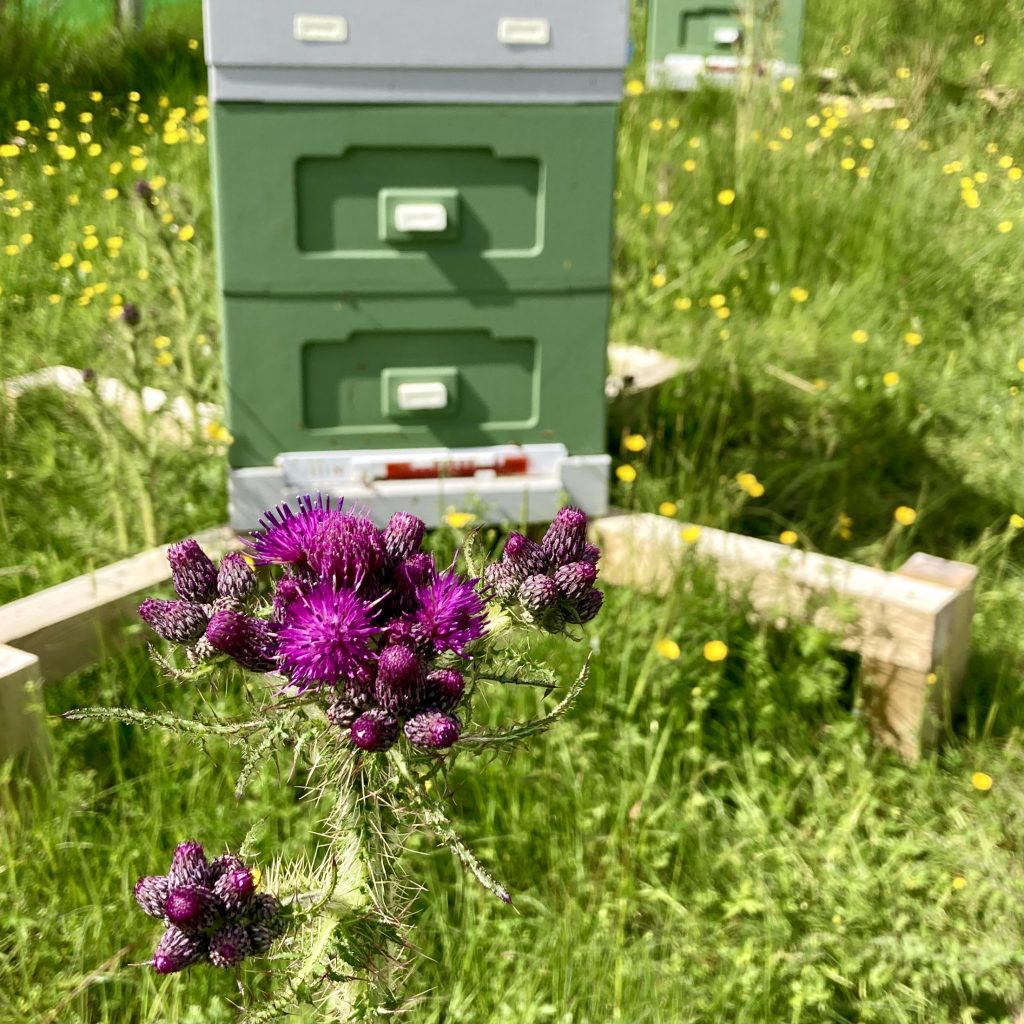
Things are improving, with warmer weather and blue skies yesterday giving us the occasional reminder that summer is on the way! The grass and wildflowers are growing at a rapid rate and the birds, deer and rabbits are enjoying life on Croft 5.
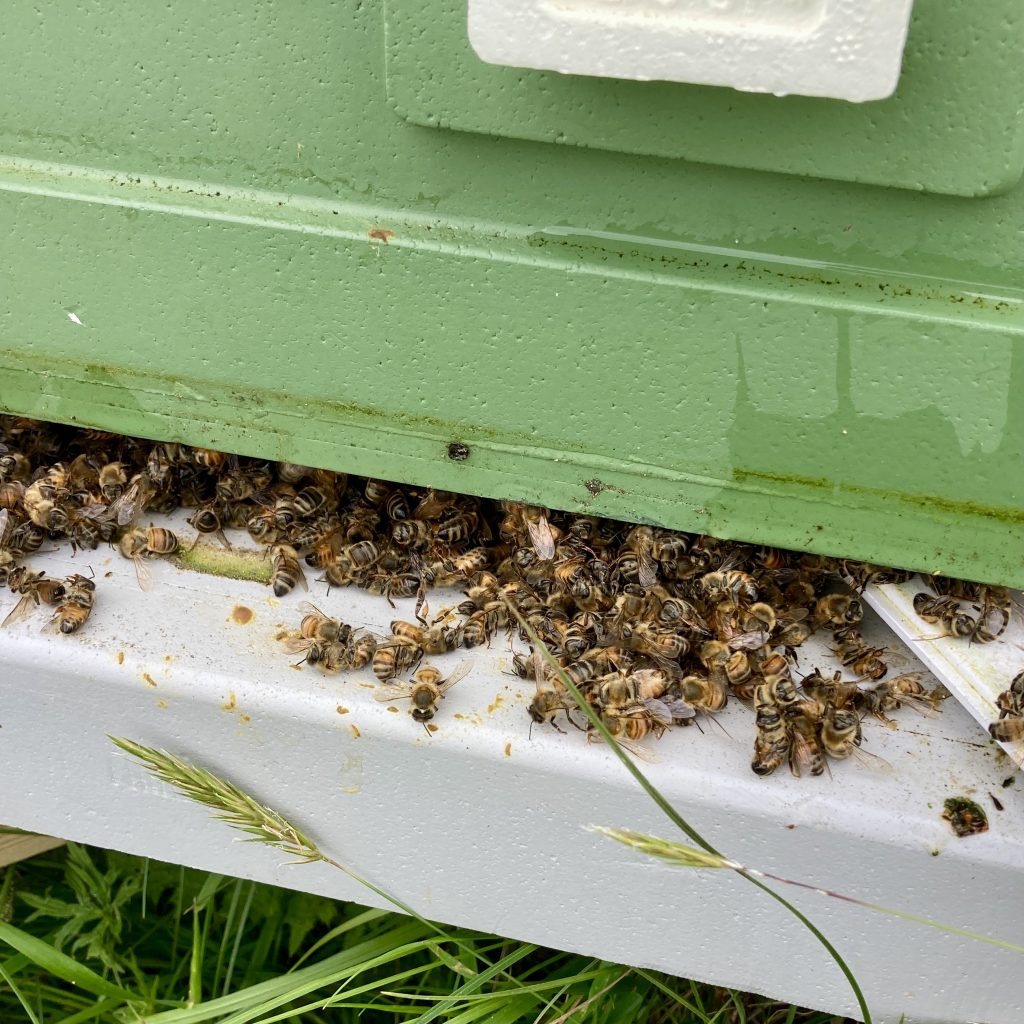
However this hasn’t been frequent enough for the bees. Whilst carrying out work on the new fencing I noticed one of the hives had no activity. Neither had been especially active lately but this one was dead. Literally. The entrance was blocked and any ventilation through the mesh bottom board removed by the carpet of dead bees.
I cleared out the entrance and the baseboard and quickly added some sugar syrup to help the few remaining bees. It looked like they had starved, with all of the frames previously full of stores and honey now completely bare, but that wouldn’t explain the sudden disappearance of the stores and the rapid death of so many bees.
The following day there was a frenzy of activity around this hive and the other. It became obvious that the previously weaker colony of bees were now robbing the stores from this one. I can’t blame the bees really, the weather has really restricted flying time and nectar flow and with their ample stores reduced to nothing the bees turn to survival mode. Even if that mode results in the killing of another colony to rob it’s stores.
Mind the Gap
Inspecting the second hive found that the levels of stores were also dangerously low (despite the robbing).
This period in beekeeping is known as the “June Gap”, a period in the beekeeping calendar where the spring nectar flow has stopped and the summer flow has yet to start. The flowers are out but the nectar isn’t present. The timing of this varies across the UK, and the duration. Combined with the recent (and current) weather it has been difficult to pinpoint the gap. The bees know though, and running short of incoming nectar triggers a slowdown n brood production and an aggressive turn towards any weaker, nearby colonies. As the battle for survival commences any weakness in the defending colony results in a mass casualty event, as I suspect the case has been here at the Hebribees Honey apiary.
Some beekeepers remove the spring honey from their hives but that can escalate the problem unless it is replaced with feed. We didn’t get a spring crop. Yes, we had some honey stored, but not in any removable quantity.
I removed the (no) honey supers from both hives and added feeders. Ideally I would move the hive that had been robbed to give it chance to recover, but I feared that time had passed and it would be unlikely to survive. I’m still amazed just how quickly the robbing happened and how quickly the stores became depleted in both hives. Robbing and killing must be hungry work! After boosting/reviving the colony with sugar syrup I switched to pollen patties. My thinking is this will provide the required nutrients and stimulus to encourage brood rearing and boost the colony ready for the summer. The risk is that I may have to continue feeding for brood expansion at the expense of honey production. Fingers crossed for a summer…
The disappointment of seeing so many dead bees, especially given how well they had done to come through he winter, was a hard lesson. The spring dearth and risk of starvation is very real. Next year I shall have to be prepared to keep a much closer eye on the level of stores and feed, feed, feed through the dearth.
So where does that leave the honey for this 2026 season?
Sun, sun, sun, here it comes
I inspected both colonies and both looked to be a similar size and in a similar condition. The good news was the queen was present in both, and I saw the marked queen. I had wondered if she had been superseded, but no, she survived both the winter and the spring attack!
More good news is that the weather is expected to warm up over the coming week, and if last year is anything to go by these buckfast bees can expand rapidly and produce honey quickly given the chance.
The beekeeping season is expected to be shorter here in the Outer Hebrides, and last year I did manage to jar some honey from August and September alone. So if all goes well there should be the opportunity to put the supers back on and harvest some honey from the 2026 season.
The priority is to maintain strong and healthy colonies of bees, and honey would be the by-product of achieving that. But beekeeping was always about the honey. Without this harvest keeping bees on the croft isn’t feasible; they require a lot of time, money and effort like any livestock does, but there are no grants or subsides for keeping bees.
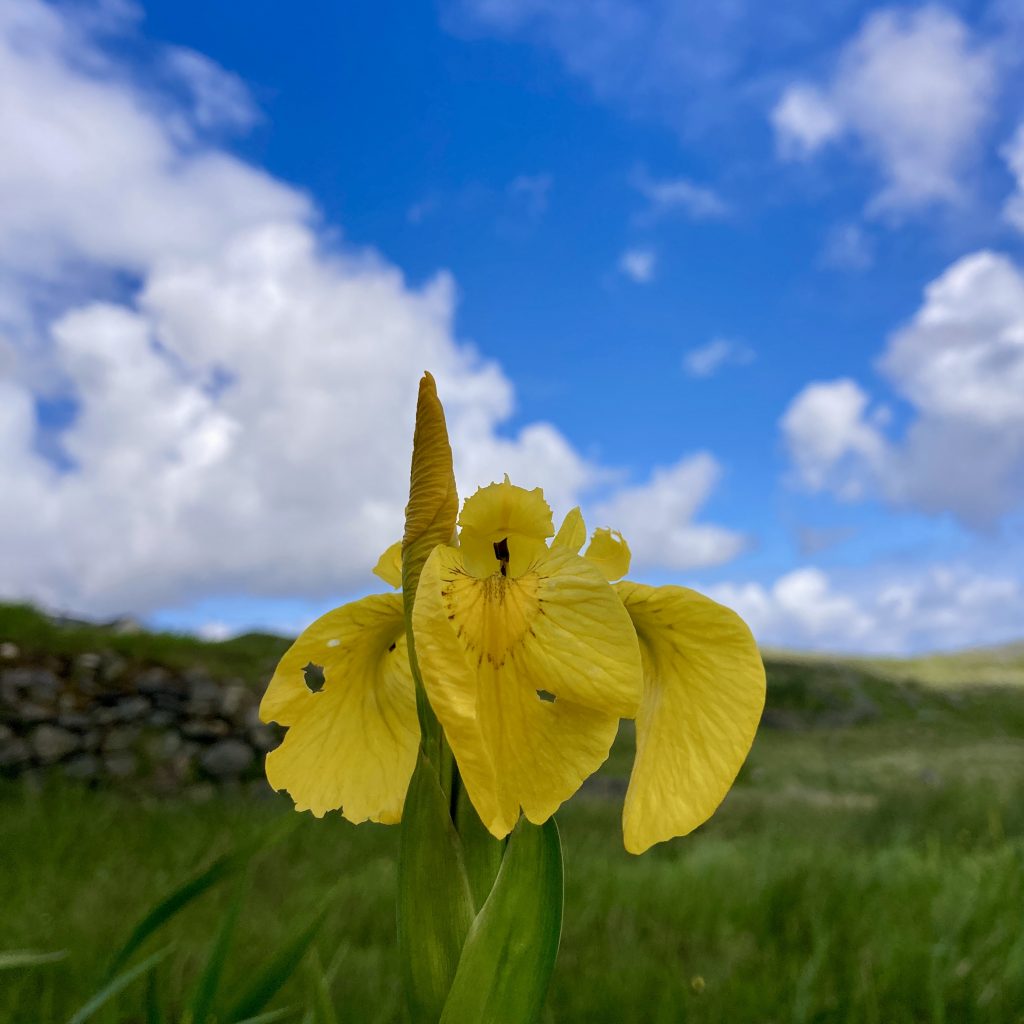
I can improve the availability of forage a little by planting more trees and hedgerows, and maintain a diverse range of wildflowers. The flag irises for example (pictured below) are just coming into flower, and I can increase feed during the June gap. But I can’t change the weather.
Honey from the Isle of Lewis is such a rare commodity, and a truly unique product. Hopefully following this blog gives you some insight into just how difficult, how rare, and how special any honey harvested shall be.
Here’s hoping the nectar dearth is coming to an end and the bees are down but not out.
Don’t forget to keep up to date with Hebribees Honey on Facebook. The content is about the honey so like and follow to never miss a jar!
If you enjoy reading the Croft 5 blog, you might like to support the work that happens here.
Instead of “buy me a coffee”, we offer something a little more lasting:
Leave a Reply