It Ain’t Over ’til It’s Over
Whilst the beekeeping season is over for most of the UK, Scotland and the Isle of Lewis have a later start and so a later finish, extended further by the late blooms of heather.
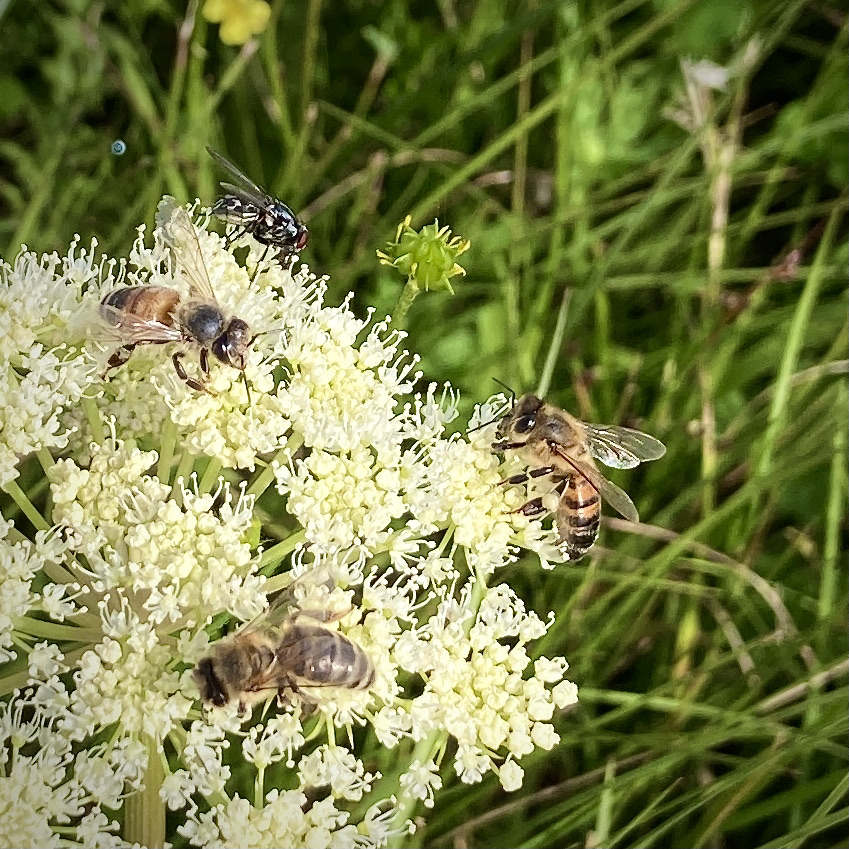
The droughts and heatwaves that are making the headlines in England and Wales haven’t affected the island and so the nectar is flowing and the pollen still coming in. The heather has come into flower in August and along with the thistles are providing a good amount of forage for the bees
A new sighting in the apiary was that of “Angelica” and the bees are enjoying foraging on it. With a god mix of mild weather, sun, and showers the wildflowers and heather are doing very well here on Lewis.
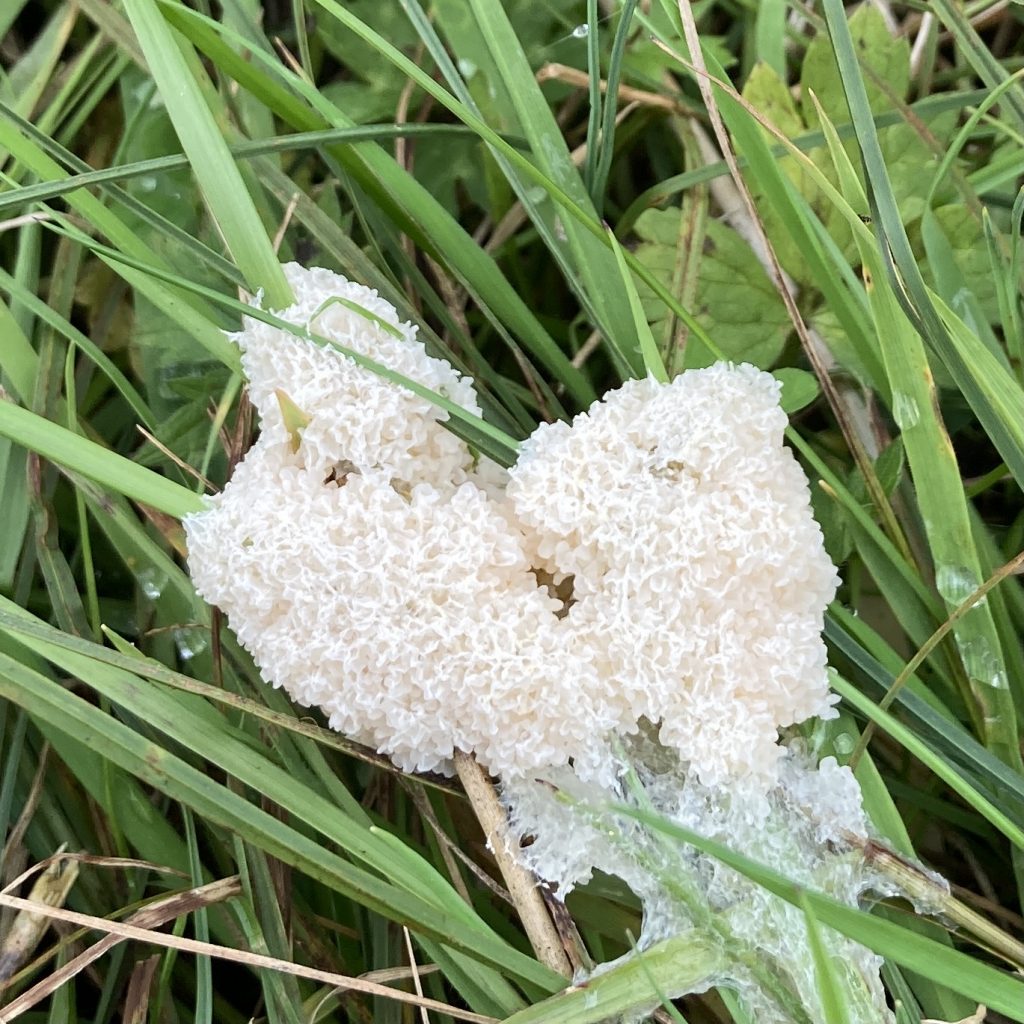
Another (more otherworldly) sighting on the croft was Slime Mould. I must admit, I had no idea what it was when it appeared, but it turns out is completely harmless and super interesting. It arrived one morning and disappeared by the next.
Slime moulds are fascinating microscopic organisms that feed on bacteria, fungal spores and decaying organic matter. They are particularly noticeable in cool, damp conditions and can appear almost overnight, before disappearing just as quickly once they have released their spores. There’s no need to remove them, but they are a strange phenomenon; one that adds another species to the list of biodiversity on Croft 5.
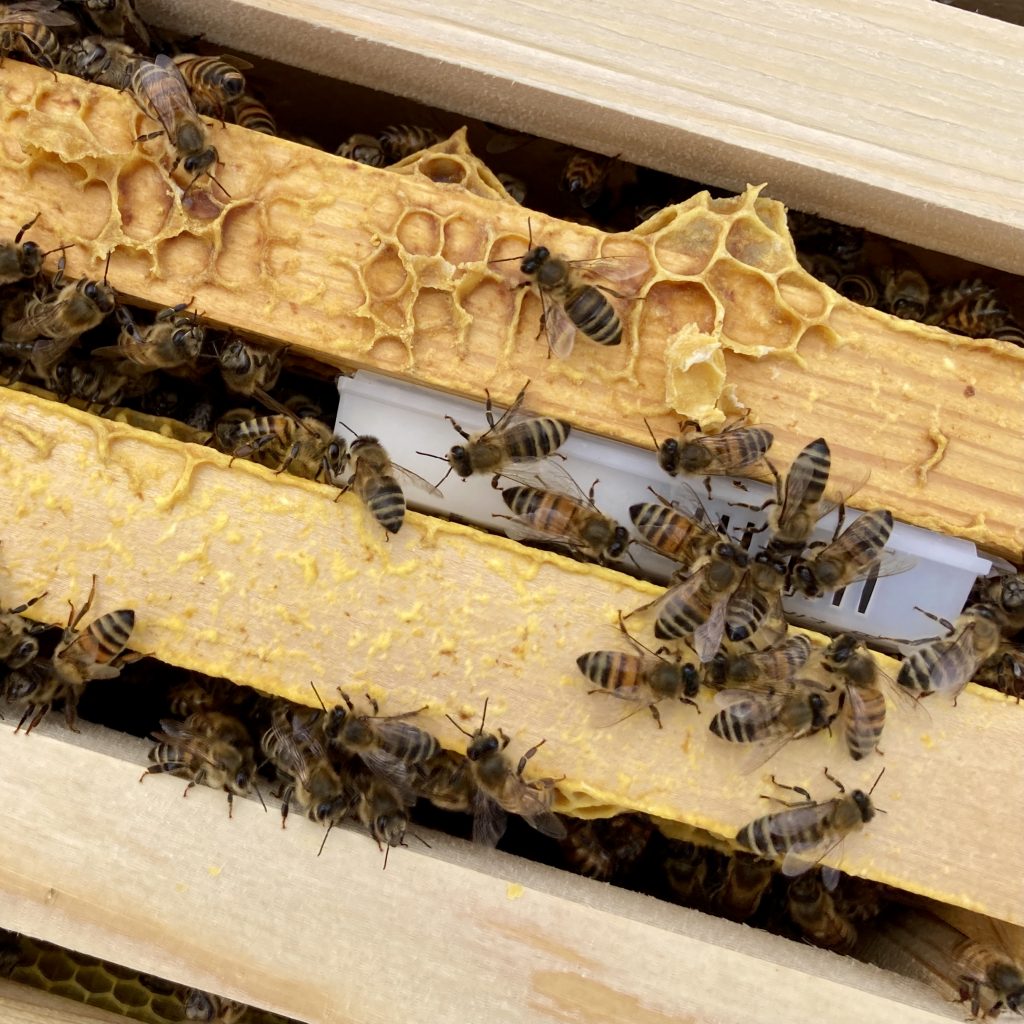
In other news my most recent inspections found Hive 1 to be in a very strong position, with plenty of brood and stores and nearly two boxes full of bees. This is why I choose to double brood my hives. The buckfast bees expand rapidly and can easily fill a standard national brood box, even towards the end of summer or following a poor spring and disease setbacks.
Hive two is a few weeks behind but also recovering nicely and looking on track for their winter preparations which will start over the next few weeks.
Our latest mite check found yet again we are free of varroa mite. We purchased our starter flock from an area without varroa mite and hope that we can maintain this status. Not all of Scotland or the islands are varroa free, but there are many areas to the west and over the islands that report varroa free status. The only real way of maintaining this would be to purchase bees from other varroa free beekeepers here on the island, but more about that later in the blog.
Our Hebribees are hardy and resilient and becoming more so with each season on the island!
Bumblebees and Universities
As mentioned in the last crofting blog, we had a visit from ecologist Dr.Johanna Yourstone and two volunteers from the University of Aberdeen. Johanna is studying the interactions between honeybees and rare bumblebees in the Hebrides and we were happy to help. Perhaps the eight bees she sampled from each colony were not so happy to be sacrificed in the name of science, but they were quickly dispatched and popped in a test tube for further analysis. You can find out more about the study here: https://www.abdn.ac.uk/news/25819/
Once the study is complete we hope to welcome Dr. Yourstone back to the Isle of Lewis to present her findings!
Making Splits
August is a time for beekeepers to start thinking about winter. There’s a saying in beekeeping that it only has two seasons: winter, and preparing for winter. I’m not sure I agree with that but it doesn’t seem long since I was writing about the first signs of spring. Now the nights are drawing in, the weather is moving away from what little summer we had, and the bees are going to be thinking about their winter preparations again.
I decided that Hive 3, our newest colony purchased in July, was looking plenty strong enough to produce a split from. Producing a split just means taking some of the colony and moving it into another hive (or nuc) to start a new colony. In order to do this here on Lewis I ordered in a mated queen. Getting queens mated on the island is going to be difficult until there are more beekeepers in the local area and a good gene pool for the queens to enjoy during her mating flights. The weather also makes these mating flights hit and miss, and reliable mated queen production is probably still a long way off. So I purchased a top quality mated Buckfast VSH queen and waited for her to arrive by special delivery. Yup, that’s right, they come in the post via the ferry over the Minch, just like the rest of us!
Deciding to make a split to overwinter was two fold. The first was to give me some security should one of the hives fail over winter. One failure out of four hives is less of a disaster than one out of three, or two for example. But the main reason was to give me a head start in spring.
How I created my overwintered nuc
- Take two frames of capped and emerging brood from a strong hive
- Add one frames of stores
- Add three frames of drawn comb and/or foundation
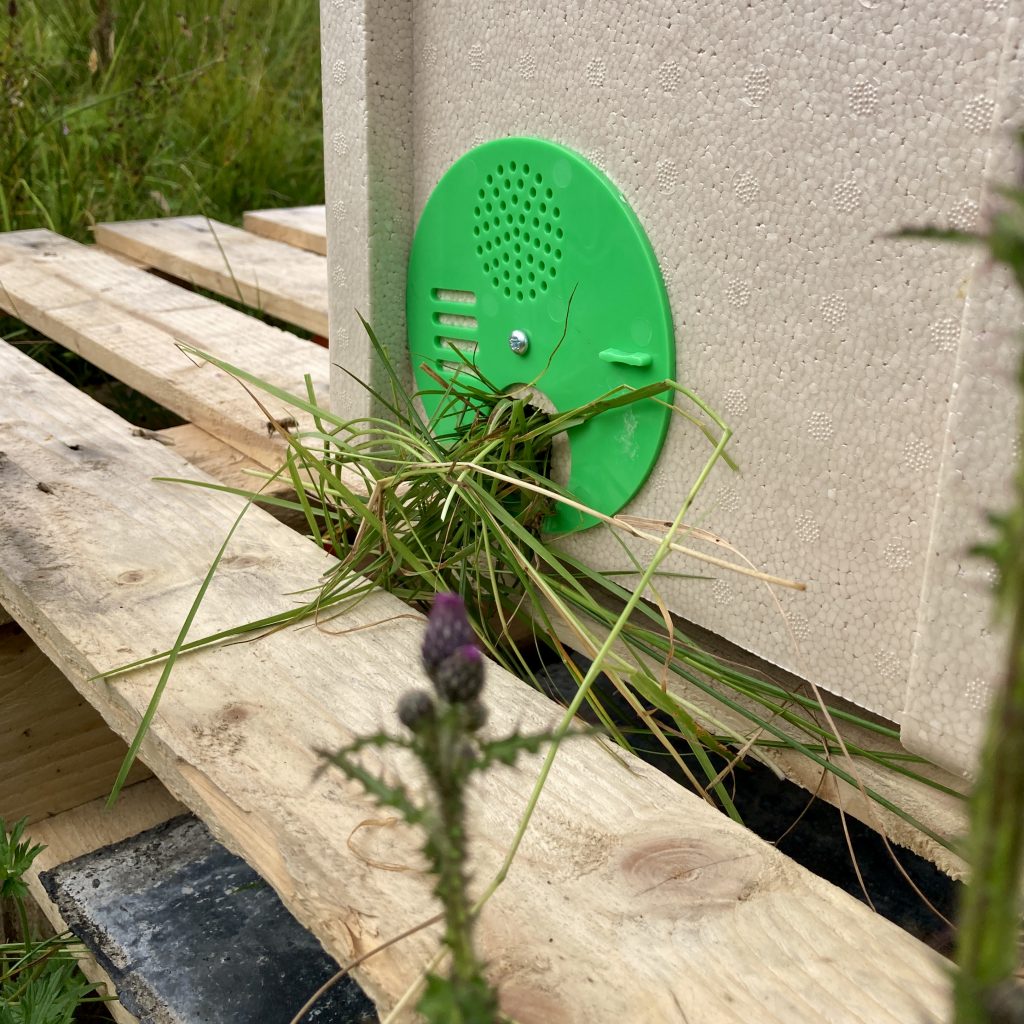
- Add a good shake of bees and plug the entrance with grass
- Add the caged queen and leave for seven days
That’s how I have done it anyway, for a split this late in the year and in the same apiary. The idea of blocking the entrance with grass is that it takes the flying bees time to exit the hive and confuses them enough to make them think that they have swarmed, hopefully leaving them to think that this is their new home. Otherwise they should be moved over three miles away as to distance them from just flying back to the original donor hive.
Adding a frame of foundation should keep the bees busy drawing it out and give them the feeling of making space for the queen to lay, while giving a frame of drawn comb gives her room to lay as soon as she is released from the cage.
So why is she still in the cage? The queen is left in the cage for a couple of reasons. She is fed and attended to whilst in the cage, but not free to walk around or lay eggs just yet. This gives the bees chance to accept her, get used to her pheromone, and hopefully not kill her when she is released. If bees think they are queen-less they will produce their own new queen from the worker brood. Adding a queen into this mix is likely to result in her death as they favour the one they are producing over an introduced queen.
A quick look at the entrance two days later and the grass had been pushed out. Bees were indeed flying to and from the entrance of the nuc and taking their orientation flight and the next day these bees were starting to bring in forage. So the grass trick to disorientate them appeared to have worked!
Time will tell but I will be inspecting the colony on day seven, removing any attempts they may or may not have made to produce their own queen, before removing the tabs and releasing the new (expensive) mated queen. Then it will be waiting seven more days before checking for eggs and to see if the introduction has been successful. Like me, you’ll have to wait for the next blog to find out the answer.
Here at Hebribees Honey we are passionate about beekeeping and know there are many crofters on the island who would also like to keep bees. Yet it is difficult to get started. There are beekeepers on the island, but no active association or group of beekeepers. No courses. No one who openly or actively supplies bees or queens. Basically a new beekeeper (or existing beekeeper looking to replenish stock) is left visiting the mainland for hands-on courses, and buying bees and queens from the mainland also. Some beekeepers on the island have attended courses on, and keep black bees from, the isle of Colonsay. However this wasn’t an option for me and is prohibitive for many wannabe beekeepers.
So rather than talk about it or wait for something to happen we’re going to change it!
Exciting news is coming so make sure that you subscribe to this blog to be the first to hear about future training courses and our packages of bees, supplied right here on the Isle of Lewis from our own hardy, locally adapted stock!
Want to know what happened to the new queen? Keep up to date with Hebribees Honey on Facebook and Subscribe to the blog below.
If you enjoy reading the Croft 5 blog, you might like to support the work that happens here.
Instead of “buy me a coffee”, we offer something a little more lasting:
Leave a Reply