Spring hasn’t Sprung
In many parts of the UK the bees are already fetching in the nectar from oil seed rape and dandelion; beekeepers are splitting colonies, adding supers, seeing honey, and having concerns about swarming.
But here in the Outer Hebrides the seasons lag and it is a nervous time to be a beekeeper.
As a beekeeper we have to trust the bees know what they are doing as they have been at this survival game far longer than we have! But you’re never sure and waiting for the season to start isn’t a case of being impatient, I just want to see the bees out doing what they do.
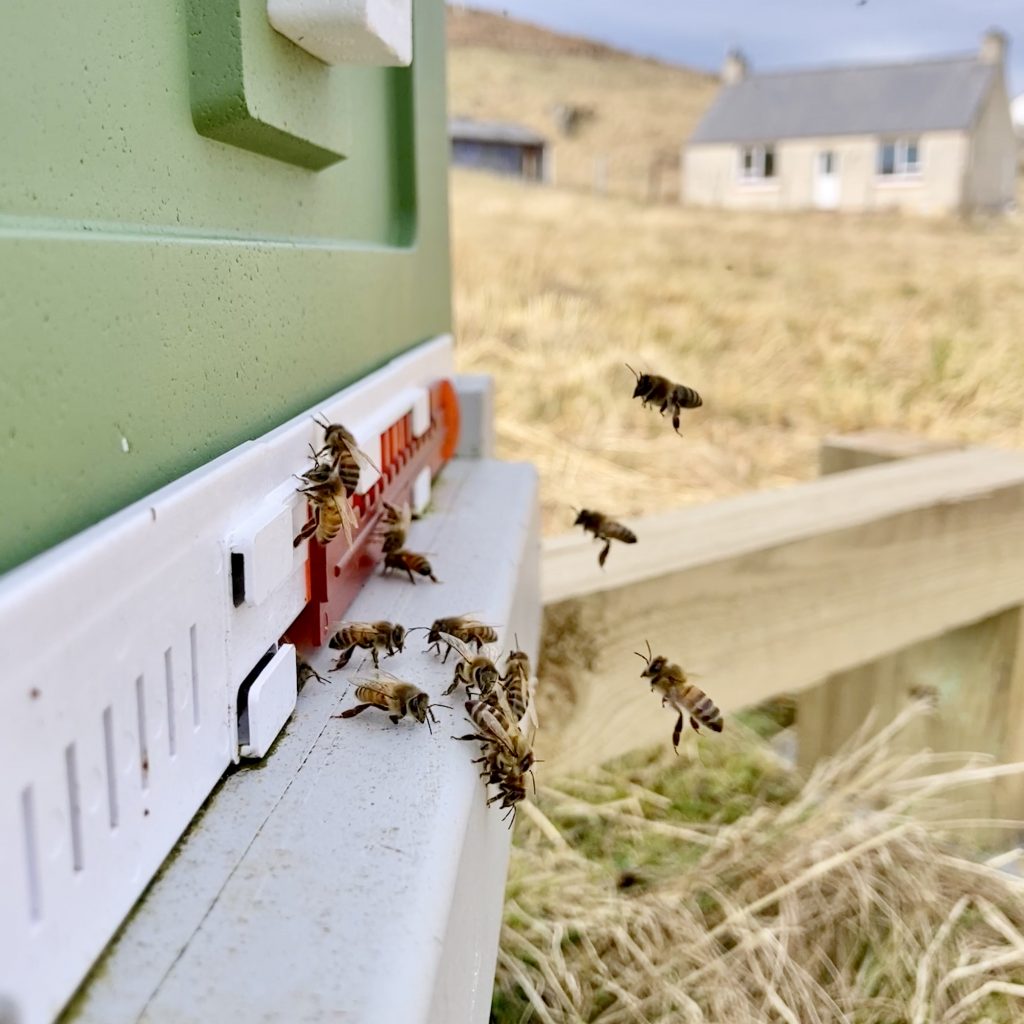
So here in Lewis, and much of the North and West of Scotland, first inspections are on hold as the temperature never quite seems to hit double figures. I can see fresh snow on An Cliseam (the islands highest point at 799m) and at 6am it might be 1°C one day or 8°C the next. I’m sure the bees are itching to spread their wings and make a start on the season because whenever the temperature does hit 10°C or the sun comes out and the wind drops giving a warm feeling there is a flurry of activity.
From this brief activity hive one appears strong and very busy. Hive two was smaller and weaker going into winter, and the same appears true from the activity I have seen. But at least there is activity and the bees have made it through winter in the Hebrides.
There’s a pollen patty on but it doesn’t seem to be enjoyed, indicating that there’s either enough limited forage coming in or (more likely) there are still some stores left in the frames.
Hardy bees indeed!
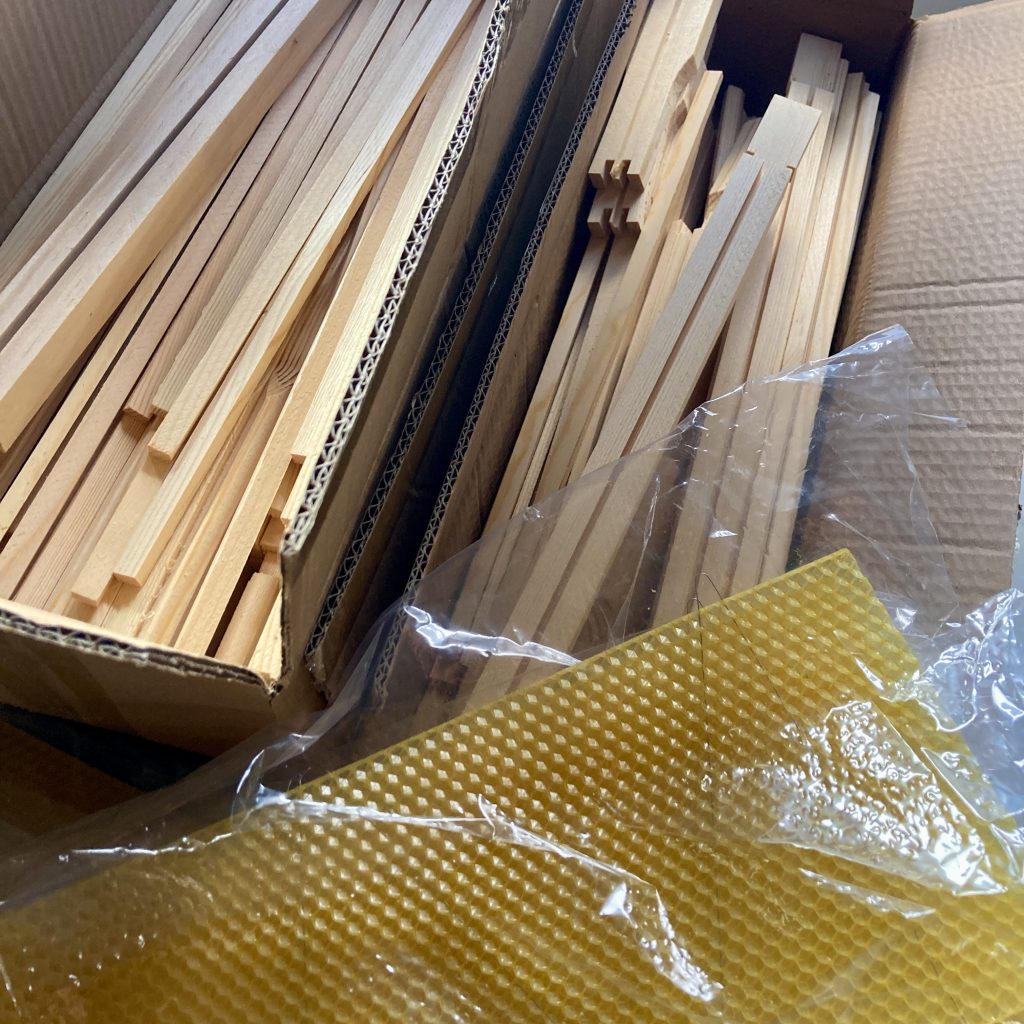
Traditionally winter is a time for preparing for the next season, but I kind of put the worst job off until last. All of the equipment is organised and ready to go, a plan has been made, and my smoker waiting to do the first inspection of the year.
However I did put off one job. Frame building.
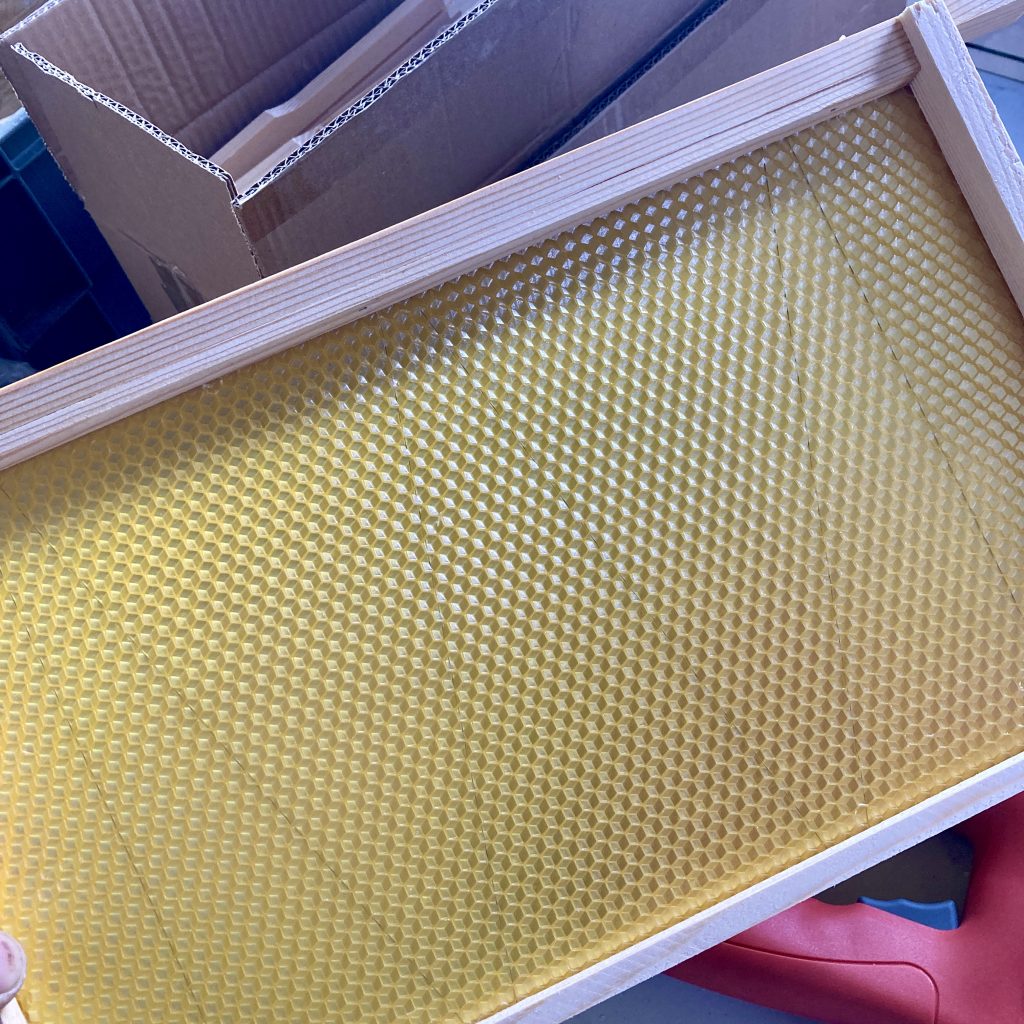
I’ve decided that this is my least favourite of the beekeepers jobs and I shall be buying ready-built frames in the future. But for now I have boxes of wood and wax ready to assemble and need to make a start because when the warm weather does come I’m sure the bees will race away with brood production and honey and will quickly need more frames of foundation.
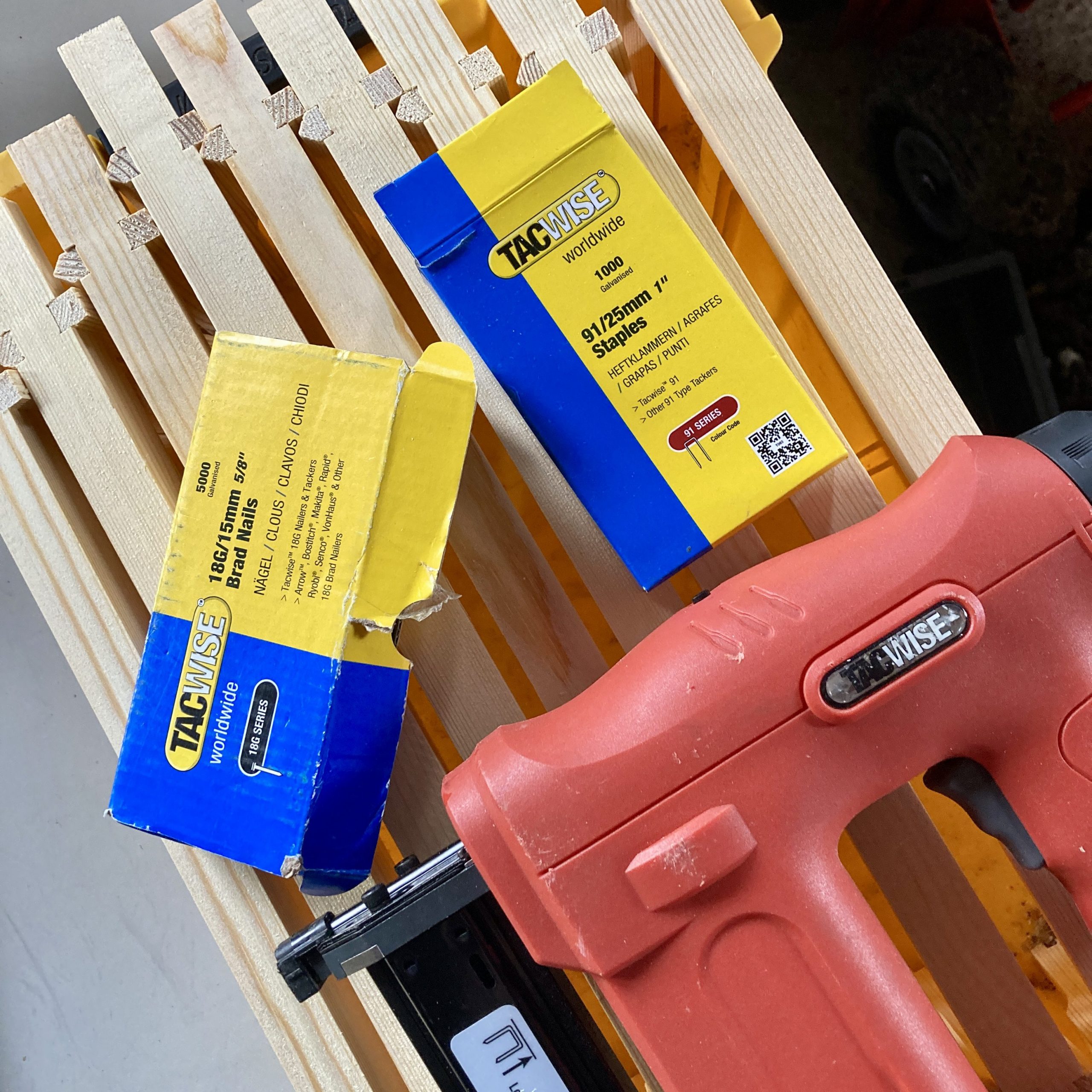
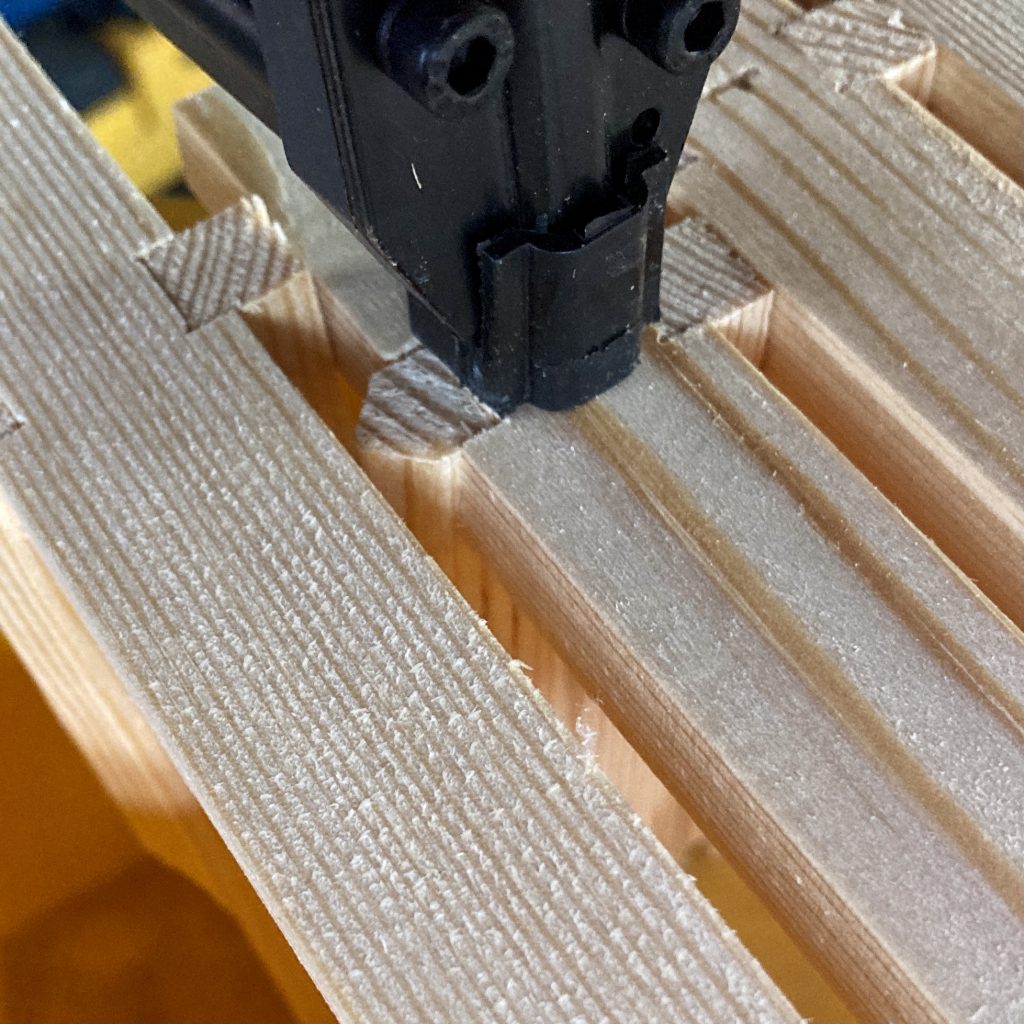
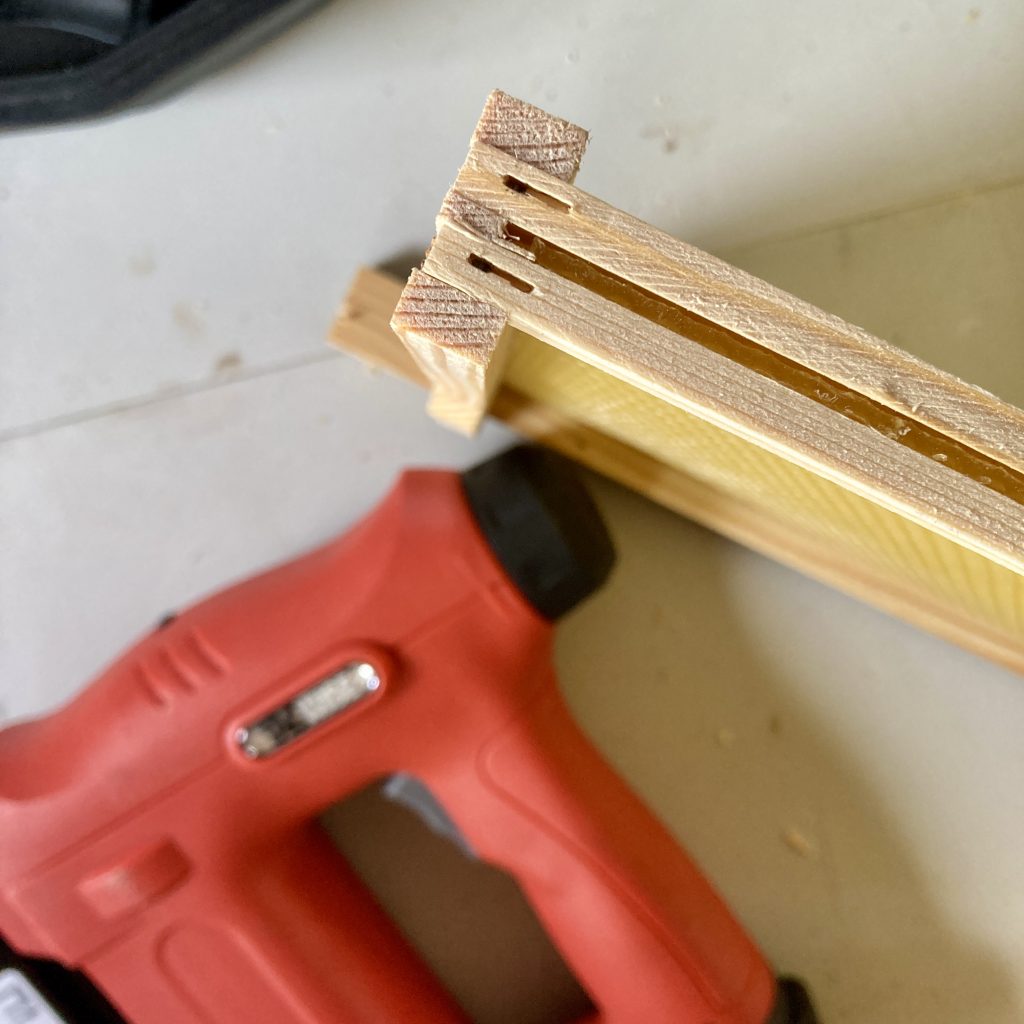
Building the frames isn’t a difficult task, but it is quite time consuming due to the steps required to assemble them. I bought a Tacwise Nailer to help and it does speed things up. My fat fingers couldn’t hold the small brad nails and the nailer makes things much easier.
I use 1″ staples in the top of the frame, and 18 gauge 15mm long brad nails for the rest of the assembly. Not sure what others do, and I’m sure there are many ways to build these, but this works well enough for me and they survived last seasons inspections and honey extraction so has proven good enough.
A simple enough job, but one I find monotonous. As I say, next time I’ll be buying a pallet of ready-made frames and save myself a day in the shed!
I’ve ordered a new poly nuc to try. With the plan for expansion I want to try and keep things uniform throughout the apiary. I don’t like using the Paynes poly nuc that I have (I’m not a fan of the internal feeder) and so I may as well try a different (and more cost effective) design before committing to a pallet load of them. Ugh, more frames to build!
That’s about all for the beekeeping update unfortunately. It’s still not quite spring and the season is on hold for another few weeks at least. Once it does get going there will be plenty more to share, but for now it’s good to report the bees have been seen, and they appear to have made it through the winter. A full inspection once we get a week of warm weather will tell the bigger picture.
Oh yeah, there are trees also! I’ve taken delivery of a selection of trees to plant that “encourage pollinators”. Thanks to those who have supported the blog by buying a tree! It really makes a difference.
There will be more information about these in the crofting blog, but I’m hoping they provide another early source of forage for the bees and they’ll increase the biodiversity of the croft by attracting other pollinators. The nuts and crab apples will be a treat for the rest of the livestock.
Don’t forget to keep up to date with Hebribees Honey on Facebook. The content is about the honey so like and follow to never miss a jar!
If you enjoy reading the Croft 5 blog, you might like to support the work that happens here.
Instead of “buy me a coffee”, we offer something a little more lasting:
Leave a Reply