
Bees in Transit
If you read the previous beekeeping blog you’ll know that June was especially difficult, and despite the welcomed warmer and drier weather, July had an equally deadly sting in its’ tail.
I had ordered a nuc last year, for this season, and so booked a ferry for a day trip off-island to collect some more bees! Dave from Croft Seventeen Lemreway joined me as we are setting up a beehive over at their croft and he fancied day out. I am excited to be setting up a hive for them in their newly created woodland.
Like everything in beekeeping it’s a large expense (£170 return just for the ferry) and I don’t really look forward to visiting the mainland, but it was a trip made better with some company.
The weather was set to warm up later in that week, timed perfectly for the introduction of the bees to their new home. At least some things appeared to be on our side. But appearances can be deceptive.
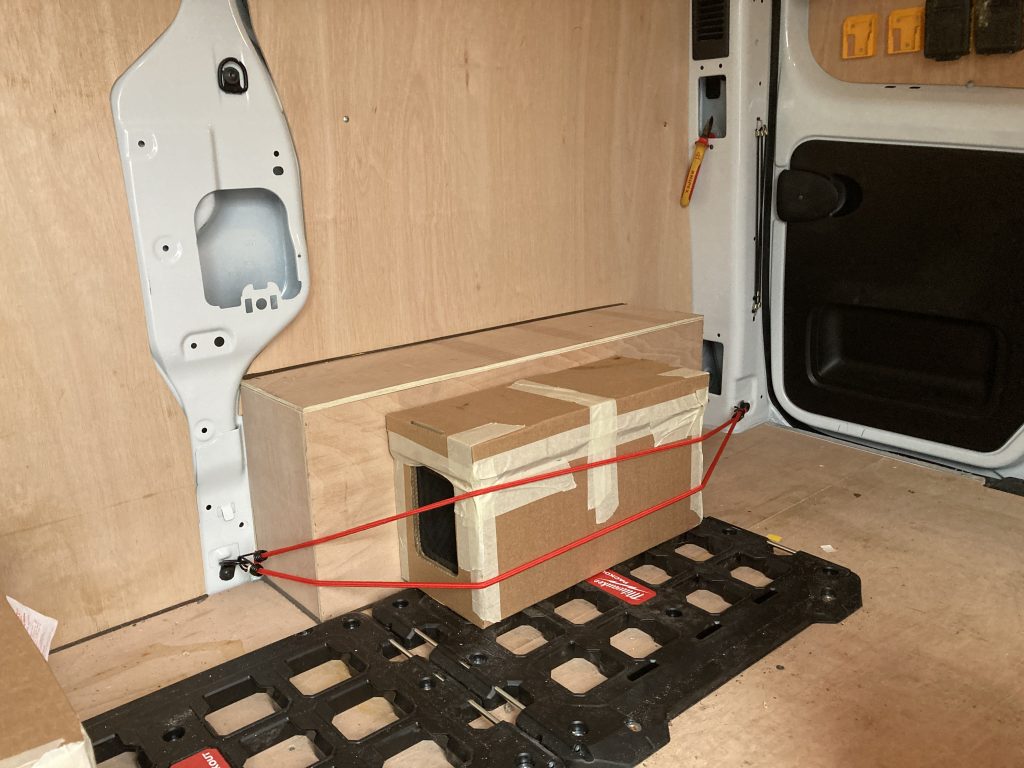
We met with our supplier in a carpark somewhere near Lochinver where the exchange took place. Two boxes of bees strapped in the back of the new van and it was time for the steady drive to Ullapool. The new van has AC and a roof top vent so gave the bees a comfortable journey in their travel boxes – it was well worth drilling a big hole in the roof of the van for.
It’s always a nervous time transporting livestock, and returning to the car deck as the ferry docked I wondered if we should open the rear door and check they are ok or wait until we get home? I decided it best to leave the door shut, just in case they had escaped the cardboard travel box; if so their next escape would have been the car deck and I didn’t think people would happy about thousands of bees trying to disembark before them! It would also have been an expensive and possibly dangerous thing to do of course.
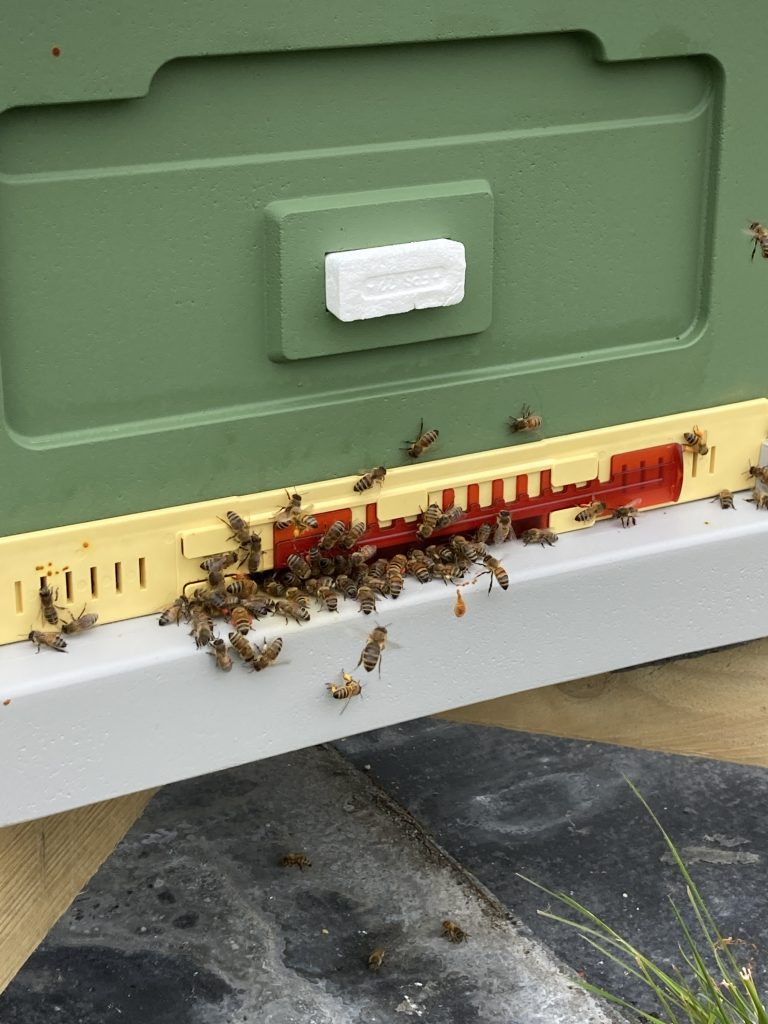
The routine was the same as last year. Home, bee suit on, transfer the bees into their nuc boxes (a six frame hive). They were surprisingly calm despite their long journey and the transfer went smoothly. I learned last time that wearing a head torch wasn’t the brightest idea as it seemed to annoy the bees and give them something to aim for, and it was light enough to work without any extra light.
One box went to Croft Seventeen in Lemreway, the other stayed in in my apiary at Croft 5 for feeding and transfer to a full 12 frame hive in a week or two.
Nevermore
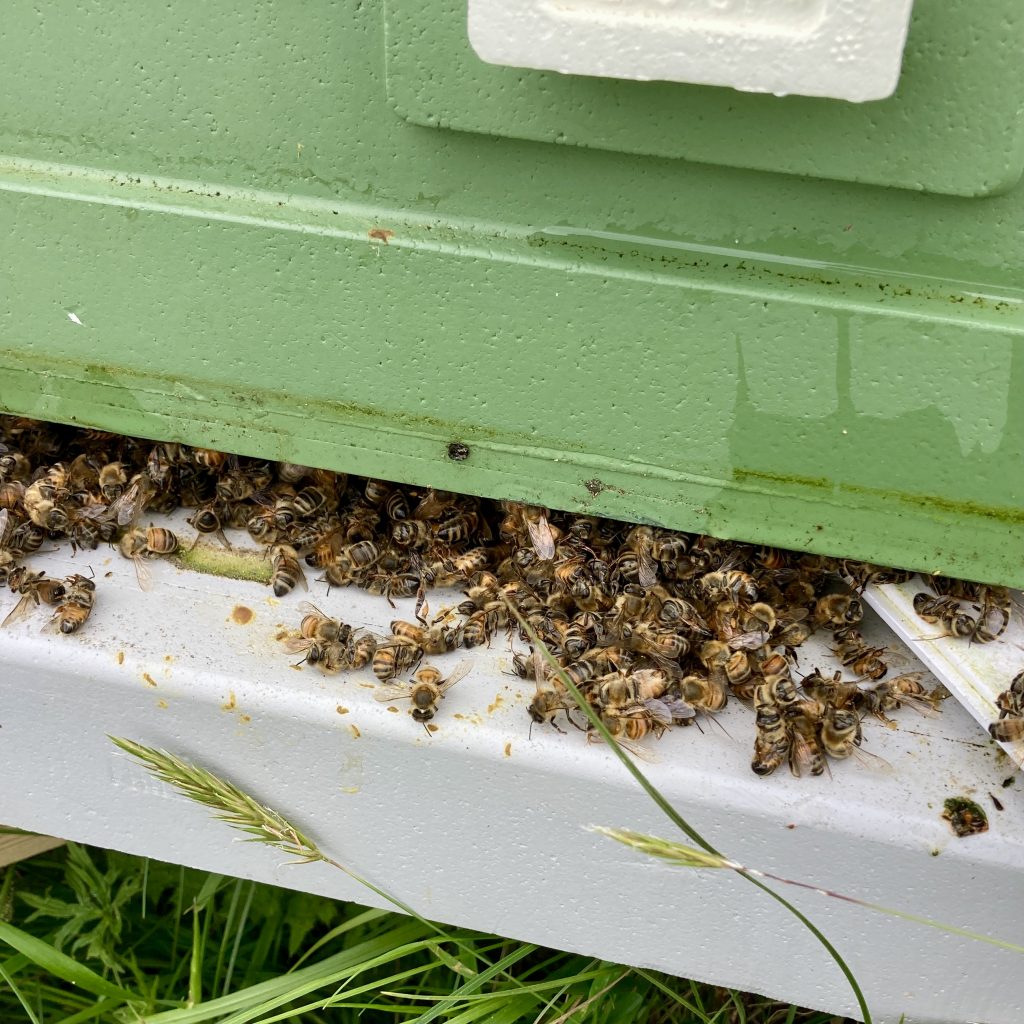
Two days later I went to check on their feeder, prepared to to it up should they need, when I noticed that horrible site of dead bees blocking the entrance of my second hive. You may remember this happened last month, with hive one, but this time we were in a warm spell with a good nectar flow and plenty of pollen coming in. Surely it couldn’t be starvation again?
It wasn’t.
A thorough inspection of the hive and the bees, and some online advice, lead to the conclusion that the colony had been struck with Chronic Bee Paralysis virus.
It’s one of the harder things to write about, but one that any keeper of livestock has to deal with. Seeing piles of dead bees at the hive entrance, especially when a colony has been thriving only days before, is not only sad but frustrating. This isn’t a rare disease – the virus is thought to be present at low levels in many colonies without causing any obvious problems. It’s only when bees come under pressure and is often prevalent during June and July when the colonies are at their busiest, the hives are crowded, and the weather prevents them getting out. June had provided the perfect conditions for the virus to thrive, suddenly takin hold and overwhelming them in a matter of days.
This isn’t a new disease, and isn’t restricted to one type of honey bee. The National Bee Unit has reported seeing more cases of CBPV this season than usual, and sadly there is no cure or vaccine to protect bees from it. Good hive management can help reduce some of the stresses that allow the virus to flare up, but even well-managed colonies can be affected. It’s a sobering reminder that, despite all our care, beekeeping still has its share of losses. All we can do is support our bees as best we can, follow the guidance, and hope they come through the other side. Hiding or not discussing our problems doesn’t help develop a true picture of the problem, and without that there will never be a prevention or cure found. Hopefully one day!
Realistically it’s a 50:50 chance if they’l survive, but the good news is the queen is present and in the following week I haven’t seen any further dead bees or signs of CBPV. I also suspect that this is what hit hive one last month, and if so the good news is that hive is recovering well and also not showing any further signs. It’s a set back, and one I hope they can recover from and build up strong enough to survive the winter.
One thing is certain. There shall be no jars of honey for market this season. We have entered a warm spell and the bees are out foraging and producing honey, but it’s too late in the season now. Even with the late heather any honey they do produce will be theirs to keep for the production and survival of the winter bees.
Well I might take one frame, for tasting purposes, and to send a sample to the National Honey Monitoring Scheme as I did last year.
Brightside
July has seen an end to the cool and damp wether, with a welcomed drier and warmer spell affecting the Outer Hebrides. The bees are loving the thistles and the fruits if the neighbours poly-tunnel, and as I continue to fence the croft I’m surrounded by the buzz of honey bees foraging around me.
I also welcomed a potential new beekeeper to the apiary at the weekend. It was great to spend time talking about bees, bee equipment, and beekeeping on the Isle of Lewis with someone who was genuinely interested. We shared some ideas and I look forward to seeing how they can be developed in the future. My focus is on getting the bees ready for winter now, but I know there is a keen group of wanna-be beekeepers on the island. There isn’t an association on the island and no regular meeting or group within the islands existing beekeepers so I’m hoping that can change as more of us get involved.
Croft Seventeen Lemreway have also thoroughly enjoyed their first beekeeping experience and it was great to be able to go over and help them set up their hive. Transferring their bees was exciting for them, and for me, as they were very relaxed about the whole affair (the bees that is). Once moved from their nuc to the full size hive the flying bees take some time to reorientate themselves and find the new hive entrance. It didn’t take long before the other bees were out at the entrance, fanning the Nasonov pheromone to guide their lost friends home. At this point I took of my bee suit and enjoyed standing amongst the buzz of thousands of bees all looking to settle into their new home. There’s something about the buzz of the bees that resonates with me and I find truly relaxing.
That reminds me, I still need to build my coffee bench down near the hives.
Don’t forget to keep up to date with Hebribees Honey on Facebook. The content is about the honey so like and follow to never miss a jar!
If you enjoy reading the Croft 5 blog, you might like to support the work that happens here.
Instead of “buy me a coffee”, we offer something a little more lasting:
Leave a Reply