
A Barrow Full of Bees
Winter is normally a quiet time for the beekeeper. As the year draws to a close here on the Isle of Lewis the days are short and the nights longer. There have been lots of things happening on the croft, but little in the way of beekeeping.
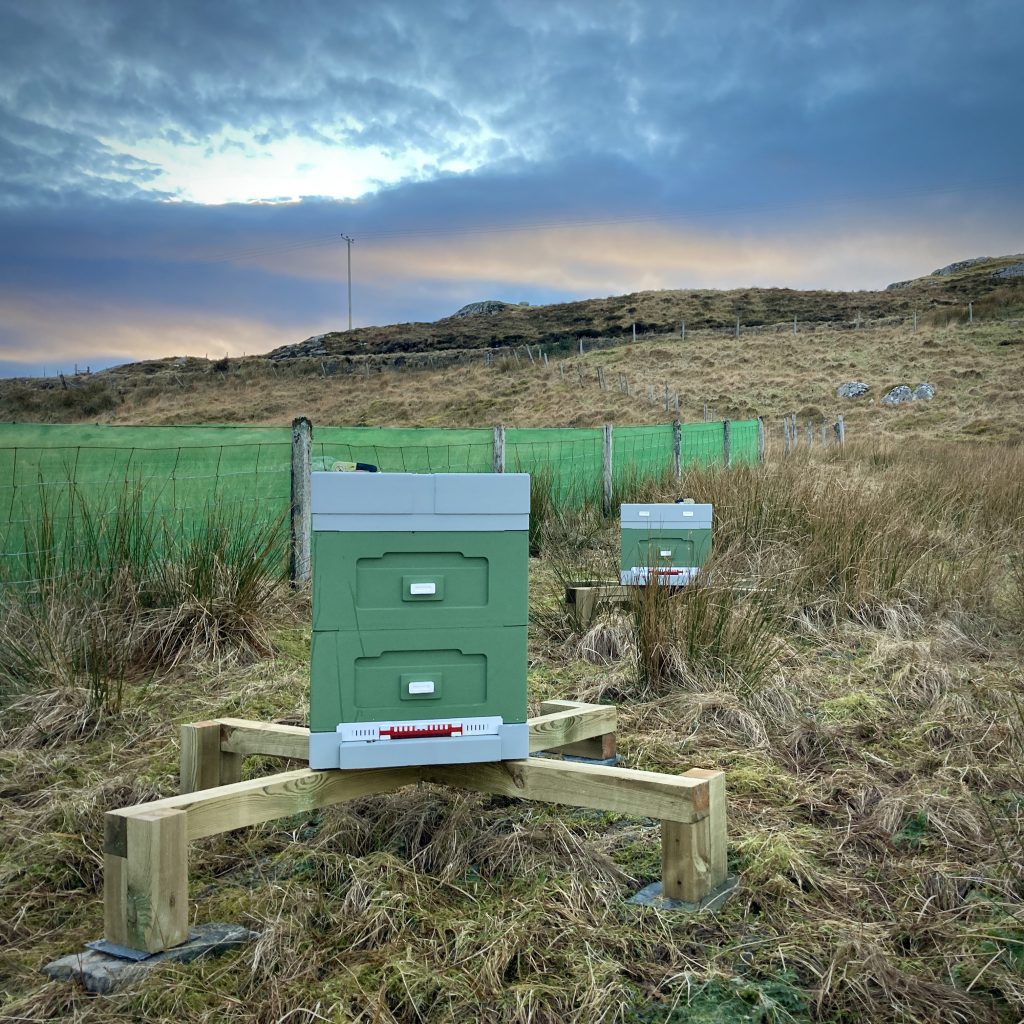
For the bees winter is a time of deep survival. There are no flights now, except for the occasional cleansing flight on the slightly better days (even bees can’t hold it in for a whole season). Bees don’t typically poo where they eat and so when they get the chance they evacuate outside. There’s no foraging, no flowers. Inside the hive, the colony is formed in its winter cluster keeping the queen alive.
As beekeepers, our role is usually one of supervision. The hives are checked from the outside, their entrances kept clear of debris, the straps secured against gales. A quick check of fondant and plans made to replenish if required.
But not for this beekeeper! This week we moved the bees to their new apiary here with us at Croft 5. The Abelo hives were carefully strapped together and the entrances closed ready for the move. The hives were quiet with little activity as expected at this time of year.
A short carry followed by 27 miles in the back of a van, and a further 100m in a wheelbarrow, disturbed their hibernation and the familiar buzz of the hive could be heard. I was nervous about opening the entrance, wondering how upset they might be about the move. So with the bee suit on, just in case, I opened the entrance to the sound of buzzing bees and…
…all good! A few bees popped out and climbed up the front of the hive to orientate themselves, and shortly after they were all inside again, cosying up as dusk sets.
I expect on the brighter, warmer days bees will head out for cleansing flights and reorientate themselves to their new location. I shall give them some time, undisturbed, to settle before adding a fresh patty of pollen and fondant. This should see them through February and into March when it will be all wings to the honey making pump!
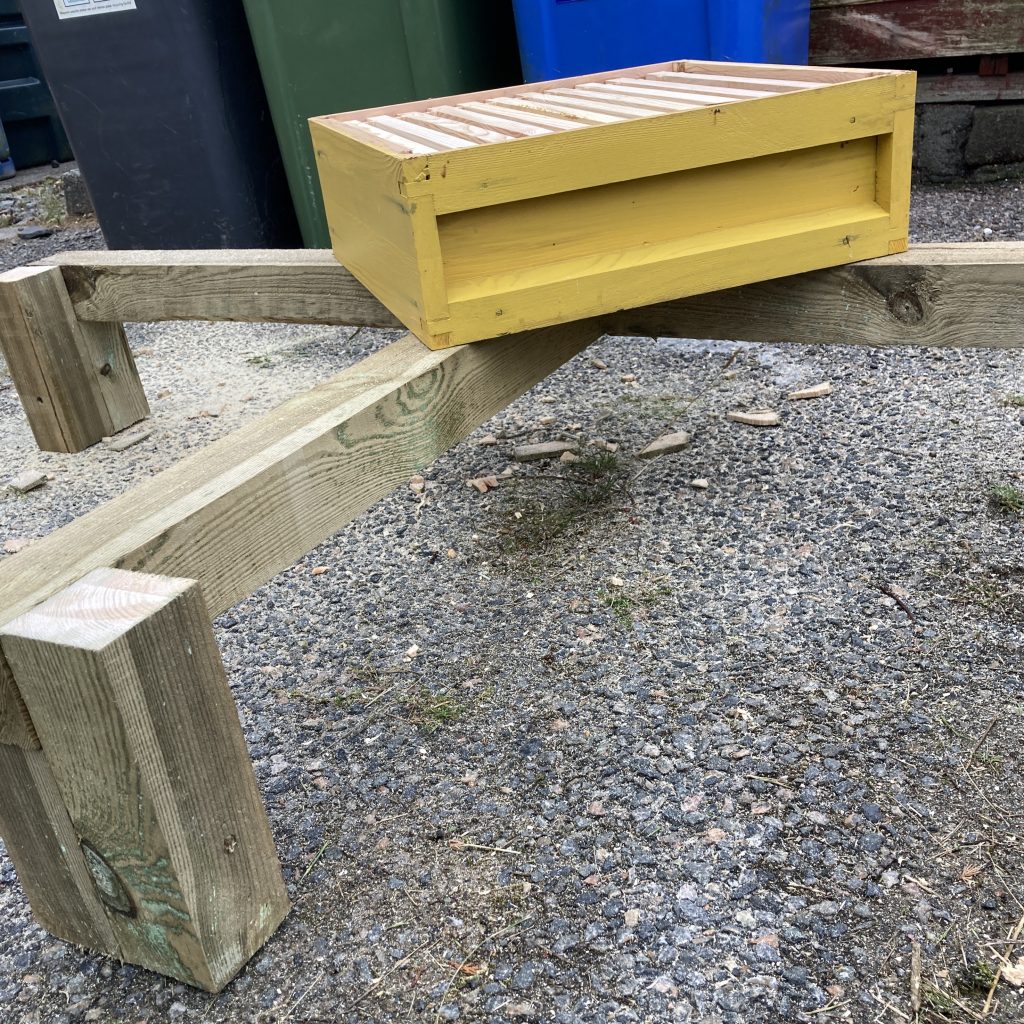
The new hive stands are doing the job that I designed them for as well. They are made from readily available materials (fence posts) and simply constructed. The design brief was that they should be:
Cheap and easy (quick) to construct from readily available materials.
Easy to transport and assemble in the field.
Strong and made to last (pressure treated fence posts stood on rock or slate)
Simple to adjust to the varying terrain of the croft.
Low enough and wide enough to support the hives during the worst of the winds.
It’s perhaps no surprise I found it an interesting project, and even did some load calculations (with the help of the internet) to determine the exact footprint necessary to accommodate a full hive, standing tall, during a 120mph wind.
It might not look pretty, but it ticks all of the above boxes (and does a good job of supporting them).
It’s great to look out from the house and see the hives tucked away in their new position. I am looking forward to sitting out amongst the bees, enjoying a cuppa whilst watching their activity. Smelling the honey and hearing the buzzy work as they produce the broad ready for the honey season.
Until then I’ll keep an eye on the hives, build myself a seat to position in the apiary, and carry on with the rest of the croft jobs.
Don’t forget to keep up to date with Hebribees Honey on Facebook. The content is about the honey so like and follow to never miss a jar!
If you enjoy reading the Croft 5 blog, you might like to support the work that happens here.
Instead of “buy me a coffee”, we offer something a little more lasting:
Leave a Reply