Summer has Passed
Summer has passed, and a year has gone so fast! It is almost one year since I received the keys to Croft 5, and it’s hard to believe that it was 18 months ago when I left the mainland for the Isle of Lewis!
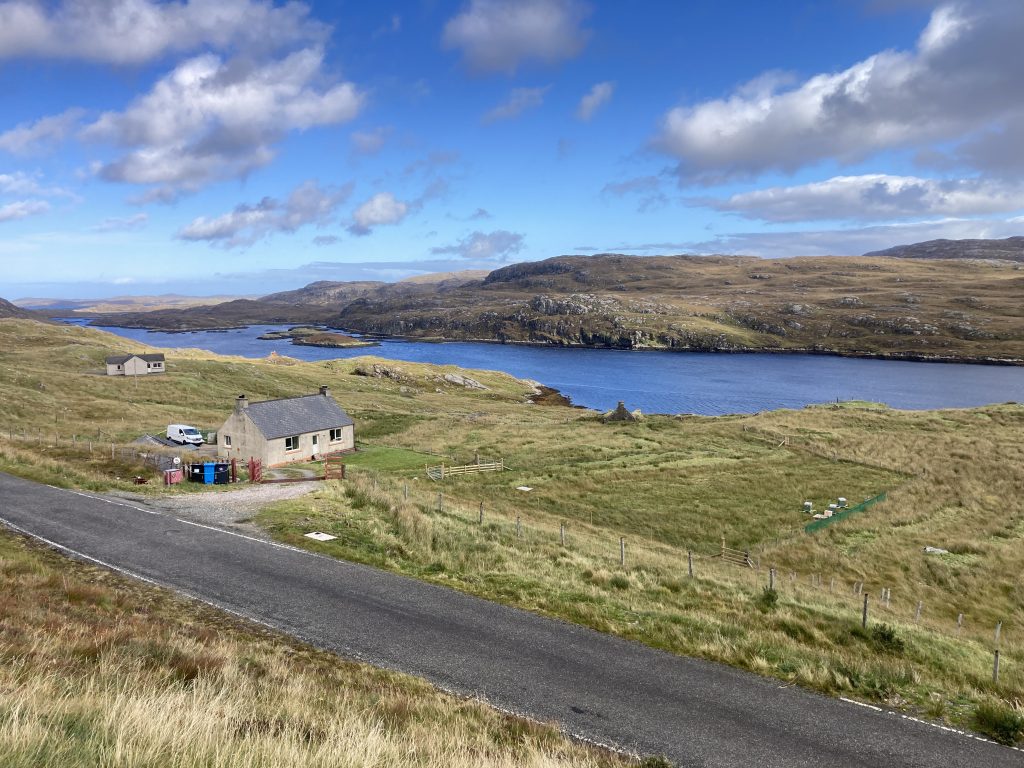
Since leaving the mainland I haven’t looked back, but October seems like a good time to reflect on the last 12 months here in Enaclete.
My list of jobs has never gotten smaller. Things take longer than expected, cost way more than expected, and the more I do the more unexpected things I find to do. Sometimes it has felt like I haven’t completed much and when looking at the ever expanding to-do list it is easy to see why. Looking at the done-list is probably a better view of the year gone.
Improvements
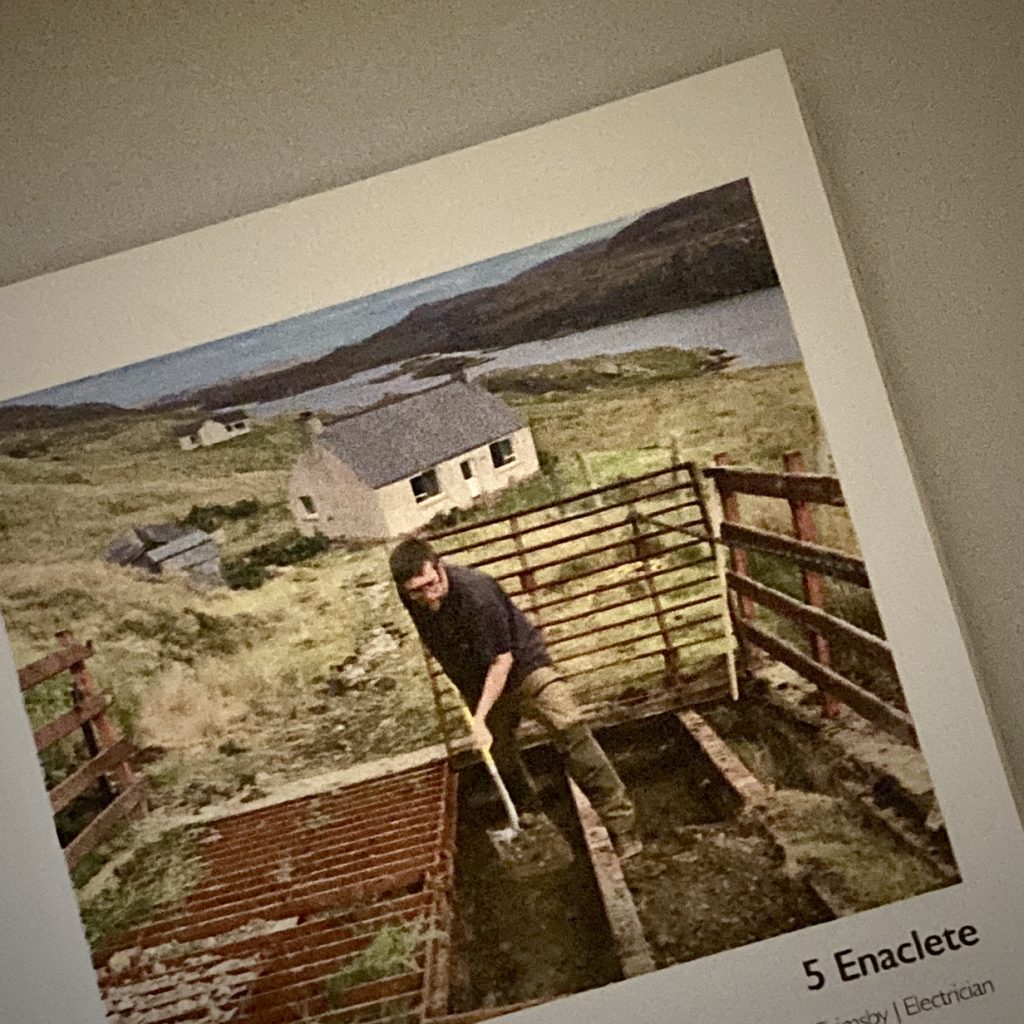
When I purchased the croft it has stood empty for a long time. It had been well maintained, but obviously deteriorated over the time it stood empty. Sorting out the basics such as access tracks, fencing, ditching and clearing were an obvious priority as these would improve the ground and the day to day life around the croft.
The previous blog posts detail the changes that have happened over the last year, and I’m happy that many of the improvements that I have made have held up and done the job.
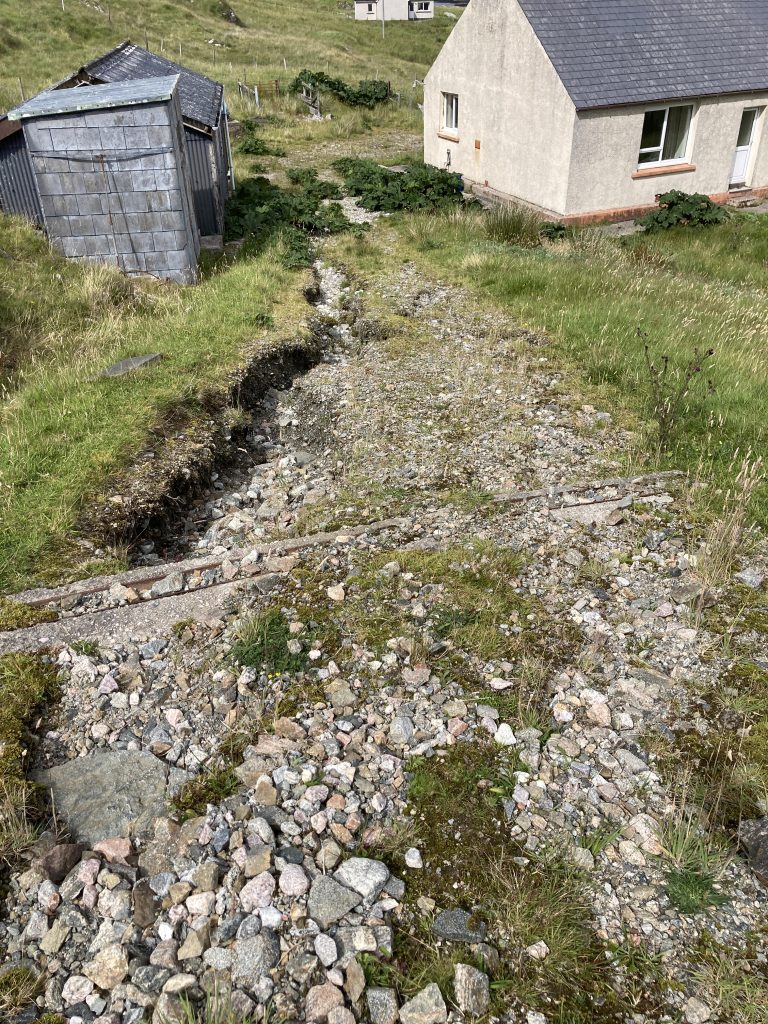
The ditching around the bottom of the croft has successfully dried out the area around the blackhouse and the access track to the house has remained in-tact since the road ditches and cattle grid have been cleared to keep water from washing it away.
Removing a lot of the old derelict fencing and clearing the invasive gunnera from the property has certainly improved the look of the croft, as has lots of strimming and grass cutting!
Of course there are also the bees, of which there are now four colonies with their own fenced off apiary, and the sheep who shall make an appearance in the next blog post!
Whilst I hadn’t intended doing much with the house in the first year things have improved indoors as well. So far there has been a kitchen fitted, the lounge and hall decorated, an immersion heater wired in, various sockets and accessories replaced, and of course all of my stuff unpacked….ok, maybe not all of my stuff, but it’s in the house. The guest bedroom was started last week and should be finished in time for my friends first visit next month. As the nights begin to draw in I shall continue to work through the house a few hours at a time, and I am pleased there is no major renovation work to do.
You Live, You Learn
It has also been a year of learning, including training courses, mistakes, and trialling things out on a small scale. It has sometimes felt like a year of biting off more than I can chew, but somehow things have progressed and it has never been boring!
One of the things I put a lot of effort into, but it didn’t work out, was the vegetable plot. The seedlings did fine but as soon as I transplanted them into the beds I had prepared things went downhill. The soil may not have been as good as it first appeared as everything and anything that got planted in it died off almost immediately. Even potatoes that usually grow anywhere! I’m starting to think that this area was actually used for dosing sheep in the past (as I had thought). I’ll need to think about this area, but won’t be using it for vegetables unless I go for raised beds and fresh soil from elsewhere on the croft. More likely is I’ll move the veg patch to one of the existing lazy beds within the apiary.
The campsite wasn’t as busy as I had hoped, and the exposed location meant that those campers who did arrive were forced to leave early. I did bring this forward from next years plan, to run as a soft launch and trial. Unfortunately the bookings coincided with the worst of the summer weather and there is little shelter on the croft (or the Isle of Lewis!) and so I have committed to putting a roof on part of the blackhouse and creating a refuge/bothy for campers to use in such conditions. It was good to get some of the infrastructure in place though, including advertising and getting a booking system trialled. Feedback was good from campers, even if the weather wasn’t.
See how easy it is for the to-do list to keep getting longer…
I also learned a lot about paperwork, grants, and Rural Payments. The main thing I learned was not to bother! The amount of effort and time spent filling out forms compared to the payments received just doesn’t seem worth it, especially when I made a mistake with one of the forms and have now been penalised because of it (despite a whole weekend of training and online webinars). I need to decide if I should employ an agent to complete any future forms, or just do more electrical work to raise funds. Honestly, the latter seems easier.
I discovered that my efforts to knock back the rush paid off as the wildflowers have thrived in all of the areas that I had attacked with the brush cutter. The grass also looks much better and should only improve with the introduction of livestock.
The ditching has worked well. I’m pleased with the area around the blackhouse which has gone form knee deep water and thick rush to a dry, walkable area. The time spent studying the contours of the croft, observing the flow of water, and planning out the ditching paid off. I think I’m pretty good at it actually and if I can get a digger onto the top field I shall carry out the same work up there.
I have also learned when to bring in extra help, and the hardstanding behind the house was a great example of this (and the major ditches opened out following my test ditching). I don’t think that would have ever been achieved without a digger and a dumper!
Many of the training courses provided by the Farm Advisory Service and the Scottish Crofting Federation have been worthwhile, and I always come away having learned something that I have been able to use in my development or planning of the croft. They have also been a great opportunity to meet with other people and get to know the who’s-who of the crofting world.
What about September?
Ah yes, September. The month that seemed to disappear before October arrived. The days are getting shorter and I am not looking forward to the clocks falling back and the afternoons quickly turn into evenings.
I had family stay for a few weeks and so spent some time visiting some of the highlights of the island including: the Butt of Lewis and The Breakwater Cafe at Ness (for the best pizza on the Isle of Lewis!), a sunny day at Luskentyre Beach was followed by afternoon tea at the Harris Hotel (never disappoints us with their warm scones and clotted cream).
I took the opportunity of the extra hands to help plant some of the 500 winter bulbs that should give the first signs of colour to the croft and provide an early source of nectar to the bees before the spring daffodils and gorse make an appearance.
Something that the Isle of Lewis does hold is a rich history and evidence of that history is never far away. In fact it is visible almost anywhere you look, with each monument or ruin holding a connection to families of this isle.
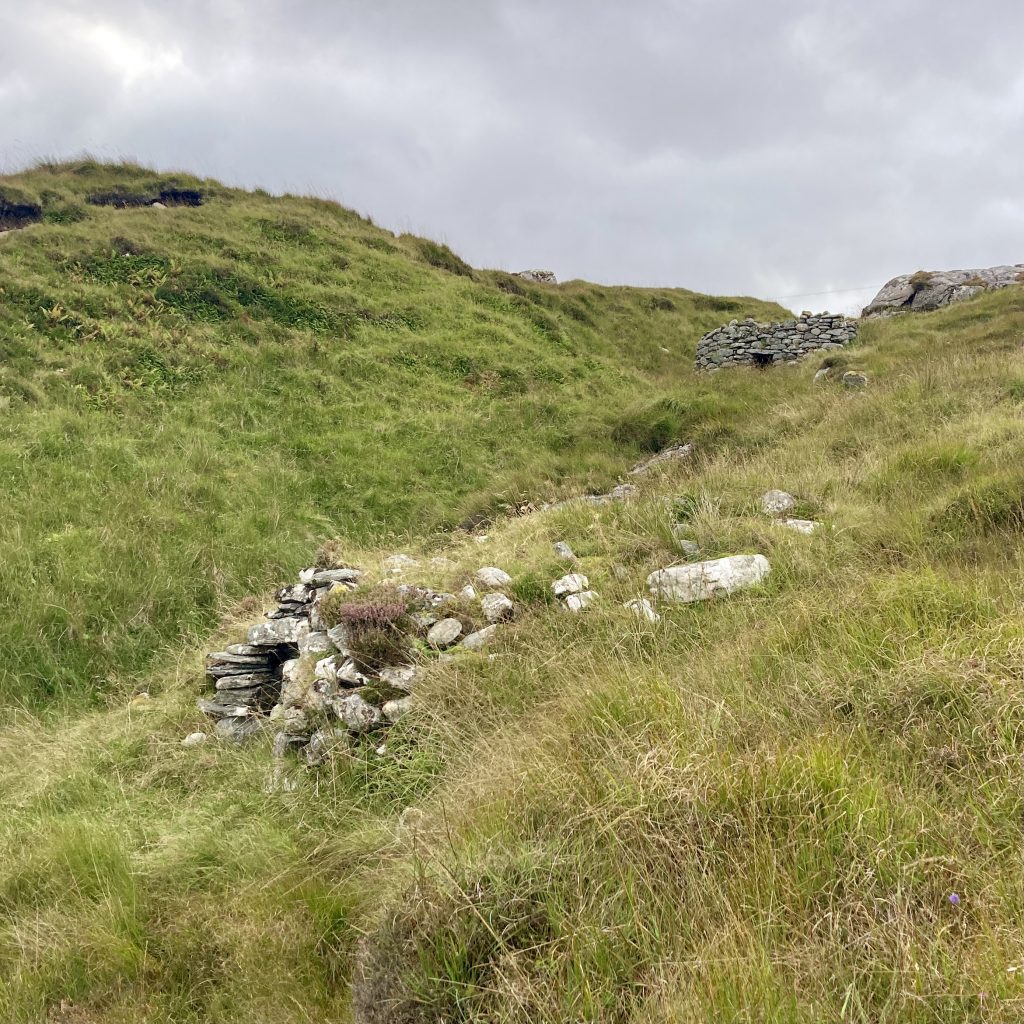
A few weeks earlier I had attended a village walk in Ungeshader, the next village over from Enaclete. The walk was well attended and the history and stories of the village and the landscape could be equally relevant to those of Enaclete. It was especially interesting to learn about the ferry and visit the remains of the mills and kiln. So much so that I was inspired to explore more of the areas surrounding the village, and set out to find the mills that are part of Enaclete’s history. I am keen to arrange for a similar walk of the village next year and shall add more about the mills when I next update the page: A Brief History of Eneclete
September also saw the sooner-than-I-would-have-liked lighting of the fire and the stocking of the newly acquired used coal bunker. I’m not ready to put on the heating yet, but having the coal fire on at the end of a wet and windy day keeps the chill off the house and dries out the wet gear.
As the price of diesel has reached £2.179 per litre the newly installed electric vehicle charging point at the Uig Community Shop is going to be welcomed by visitors and some locals, alike. Unfortunately an electric van isn’t suitable for my use and so I’m left adding a fuel surcharge to my invoices to help absorb some of the £155 it now costs to fill my van. Andy has said he understands and is going to make things better. Probably means for shareholders and the treasury though, not the average self-employed tradesman living in a rural community.
I did put some cheap(er) petrol in Old Red and go for an explore, looking for peat banks (for next years heating) and ruins towards the hills of Uig. That went pretty well with a few water crossings adding to the interest. Until I found the tractor tracks. Almost waist deep and with nothing but water under the tyres, Old Red was firmly stuck on its belly.
Walking back to Enaclete I wished I had took the farm jack with me as I had purchased it for such occasions. Why it was in the shed and not attached to the quad I don’t know, but three days later and a long walk back with a wheelbarrow of recovery gear and Old Red was free (it didn’t take three days to recover, I just couldn’t be bothered to go back in the storm that followed and it wasn’t like it was going anywhere).
Life’s an adventure and you don’t have to go far for one here. It reminded me of my days competing in Land Rovers and the time I did my BORDA off road training. I wish I’d remembered that and checked the depth of the track.


Speaking of adventure, I embarked on this life changing one 18 months ago. At that time it was an adventure filled with unknown challenges ahead, and known comforts left behind. I had no doubts, but knew it wouldn’t be easy. I usually resort to asking myself what I’ll think looking back in 1, 3 or 5 years time. Usually that’s enough to quell any doubts.
So, 18 months on and looking back, would I do it again? Having read my blog posts, what do you think!
What about the Bees?
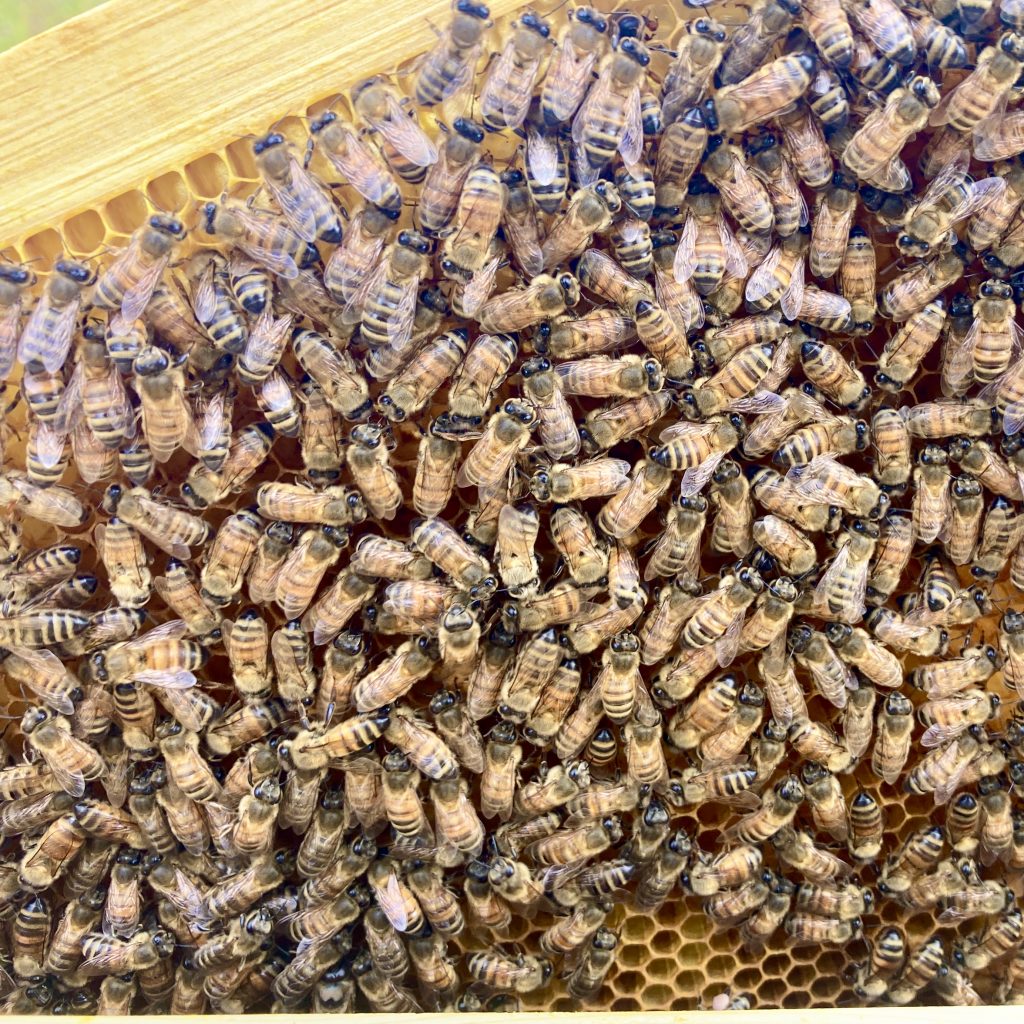
It is that time of year again, where the forage is at a minimum, the birds have taken what’s left of the seeds from the thistles, and apart from the neighbours garden and vegetables there’s little for the bees to venture out for. The drone bees have also been ejected as they serve no further purpose over winter (their only purpose is to mate with flying queens through the spring and summer) and consume valuable resources.
So we have started with the supplemental feeding of sugar syrup and switched the entrances to mouse guards in preparation for winter. I’m no sure that there are any field mice in the field, but I know there have been some in the shed so don’t want to take any chances of them finding a nice warm beehive to try and move into when the bees are clustered up.
Due to the wet and windy weather we are feeding a heavy syrup mix earlier than expected but the winter bees have been produced and they are stuck in the hive and burning through their stores. The hives need to be brought up to weight before the really cold weather arrives, and so it’s a case of feeding regularly through October until they stop consuming it.
One hive was losing weight quite quickly and the others lighter than I would have expected, but this is likely due to the sudden end to the forage coinciding with the arrival of stormier weather. With their level of feed increased they have quickly put the weight back on and should hopefully continue to build up their stores. Once the cold weather arrives activity will slow, the bees will cluster up and manage their stores over the winter season. Many mainland beekeepers are reporting drier weather and the flow of ivy so their bees are keeping busy and bringing in their own stores. Unfortunately here in the Outer Hebrides things are different and the bees require more frequent feeding.
Fingers crossed we follow the success of last year and bring all of the colonies through the winter and have them ready for a strong start to spring. There’s little else we can do as a beekeeper now and once the final feed is in place it’ll be a case of waiting for spring, checking the hive straps over winter, and keeping a look out for the odd cleansing flight on those sunnier days.
We are also pleased to be offering nucleus colonies of bees for collection in June, with a small deposit required to secure your order. So if you are looking to start beekeeping here on the Isle of Lewis check out our Hebri-Bees fo Sale before looking to the mainland for your first nuc.
Subscribe below, or follow us on facebook for even more content.
If you enjoy reading the Croft 5 blog, you might like to support the work that happens here.
Instead of “buy me a coffee”, we offer something a little more lasting:
Leave a Reply